The Deep Litter Method Explained
Published How we research
Deep litter builds a thick carbon-rich bedding layer that composts in place with the chickens' help, saving labor and producing compost, but done badly it turns damp and ammonia-heavy. Start with four to six inches of dry pine shavings, avoiding cedar and hay, then add fresh bedding weekly and let chickens turn it by scratching. Moisture control decides success or failure: keep waterers out of the coop, fix leaks, and ensure generous ventilation, checking that litter stays dry, loose, and crumbly. It doesn't suit low-headroom or poorly ventilated coops. Age harvested compost for months before using it on food crops. Deep litter is a bedding system in which you build up a thick layer of carbon-rich material on the coop floor and let it slowly compost in place, rather than stripping and replacing bedding every week. Done well it saves labour, produces excellent garden compost, generates a little warmth in winter and keeps the coop smelling earthy rather than sharp. Done badly it produces a damp, ammonia-heavy floor that is worse than any other option, so the details matter.
The principle is the same as any compost pile
The principle is the same as any compost pile: carbon-rich bedding plus nitrogen-rich manure plus oxygen plus a little moisture equals microbial decomposition. In a coop the chickens themselves supply the nitrogen and much of the turning, since they scratch constantly. As the bed matures it develops a population of beneficial microbes and small invertebrates that break down droppings before they can go anaerobic and produce ammonia. That microbial activity is what makes a deep litter coop smell like forest floor instead of a barn.
Starting a deep litter bed
To start, clean the coop down to a bare floor, then lay four to six inches of dry carbon material. Large-flake pine shavings are the most common base, and many keepers mix in chopped straw, dry leaves, hemp bedding or shredded cardboard for variety, since a mixture of particle sizes composts better than one uniform material. Avoid cedar shavings, which release irritant oils, and avoid hay, which mats and moulds. A solid floor works best; dirt floors can work but invite digging predators unless the base is wired.
Maintenance is mostly adding carbon and aerating
Maintenance is mostly a matter of adding carbon and keeping things aerated. Every week or so, add a fresh layer of bedding on top, concentrating on the area under the roosts where droppings pile up. Turn or fluff the litter with a fork or rake, especially in any damp spot; the chickens will do most of this for you if you scatter a handful of scratch grain across the floor and let them dig. Over a season the bed deepens to somewhere between eight and twelve inches. Once or twice a year, remove most of it and leave a few inches behind as a starter culture for the next cycle, exactly as you would with a sourdough.
Moisture control is where deep litter succeeds or fails
Moisture control is where deep litter succeeds or fails. Wet litter goes anaerobic, packs down, stops composting and starts producing ammonia. Keep the waterer out of the coop or on a raised platform with a catch tray. Fix roof leaks immediately. Make sure ventilation is high and generous so the water vapour the birds exhale can escape. The test is simple: pick up a handful of litter. It should be dry, loose and crumbly, and it should smell of earth. If it is matted, damp or sour, add dry carbon, turn it thoroughly and improve airflow before anything else.
Deep litter does not suit every situation
Deep litter does not suit every situation. It needs a coop with enough headroom to accommodate a deepening bed without bringing the litter close to the roosts. It works less well in very humid climates or in small coops with limited ventilation. It requires you to accept that the floor will not look freshly cleaned, which some keepers dislike. And it is not compatible with frequent full clean-outs, since stripping the bed every month destroys the microbial community that makes the system work.
The compost you harvest is a genuine bonus
The compost you harvest is a genuine bonus, but treat it properly. Chicken manure is high in nitrogen and can burn plants if applied fresh, and raw manure carries pathogens. Move the harvested litter to an outdoor compost pile, keep it moist and turned, and let it finish for several months before using it on food crops. Follow your local extension service guidance on manure handling and on how long to age compost before it goes near vegetables you eat raw.
Frequently asked questions
How do you start the deep litter method in a chicken coop? Clean the coop to a bare floor, then lay four to six inches of dry carbon material like large-flake pine shavings, avoiding cedar shavings and hay.
Why does deep litter smell bad sometimes? Wet litter goes anaerobic, packs down, stops composting, and starts producing ammonia; the fix is adding dry carbon, turning it thoroughly, and improving ventilation.
How deep should deep litter bedding get? Over a season the bed typically deepens to somewhere between eight and twelve inches, with most of it removed once or twice a year, leaving a few inches as a starter culture.
Is chicken coop deep litter compost safe for the garden right away? No, move harvested litter to an outdoor compost pile, keep it moist and turned, and let it finish for several months before using it on food crops, since raw manure carries pathogens.
Products from this article
The highest-scoring picks from the buying guides mentioned above. Scores are our editorial assessment, not customer ratings.
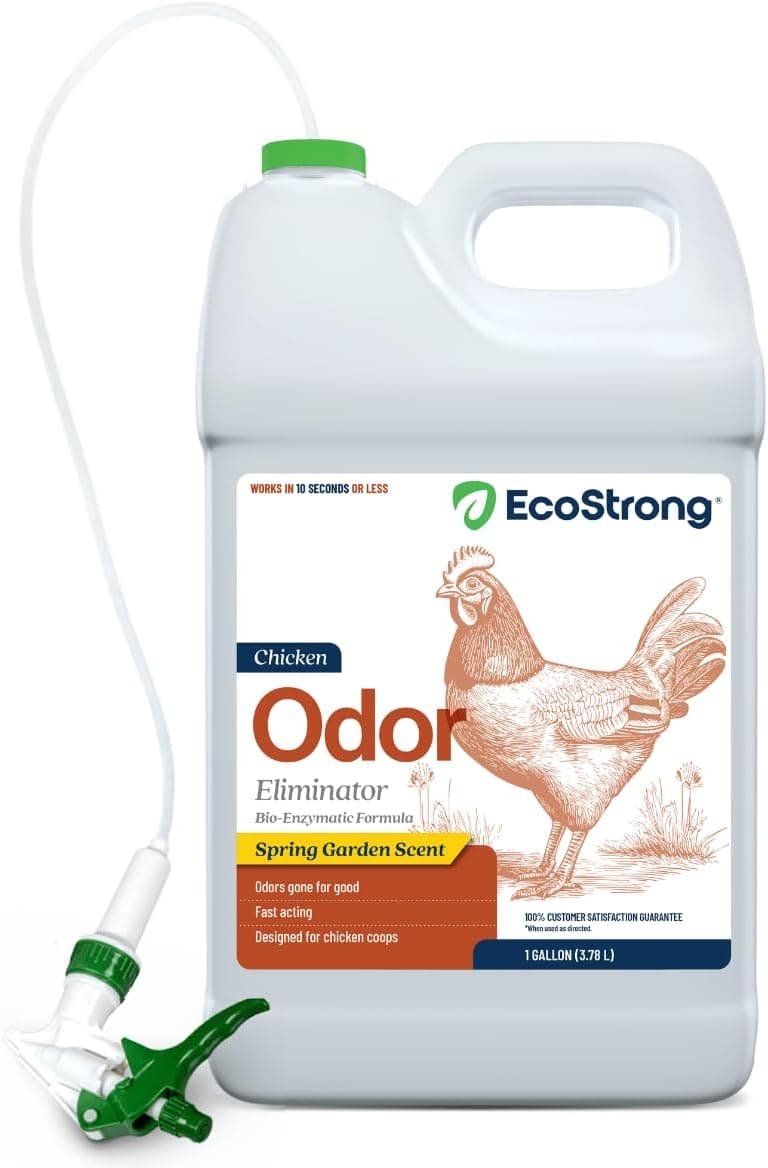
+ 128 oz jug lowers the cost per use versus the small bottle
From our guide: Best Coop Deodorizers and Odor Control
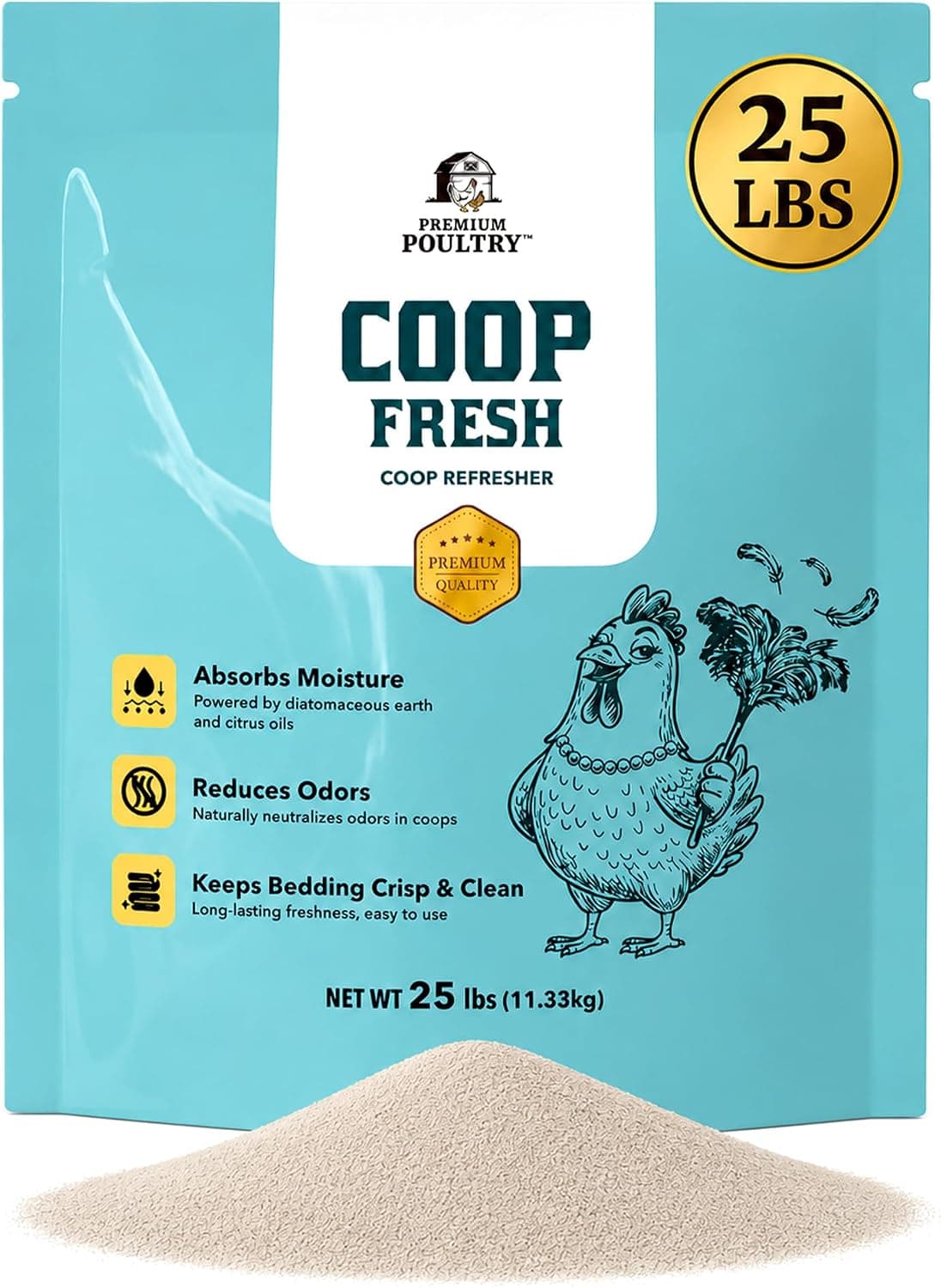
+ Food grade diatomaceous earth adds moisture absorption and drying
From our guide: Best Coop Deodorizers and Odor Control
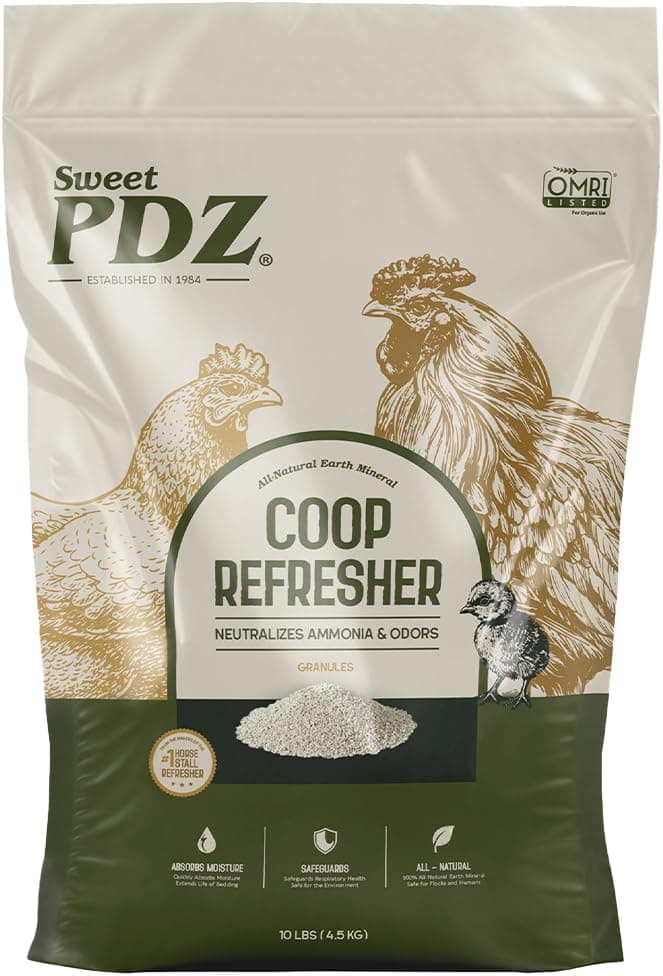
+ Zeolite absorbs ammonia, which helps the coop smell and breathe better
From our guide: Best Coop Deodorizers and Odor Control
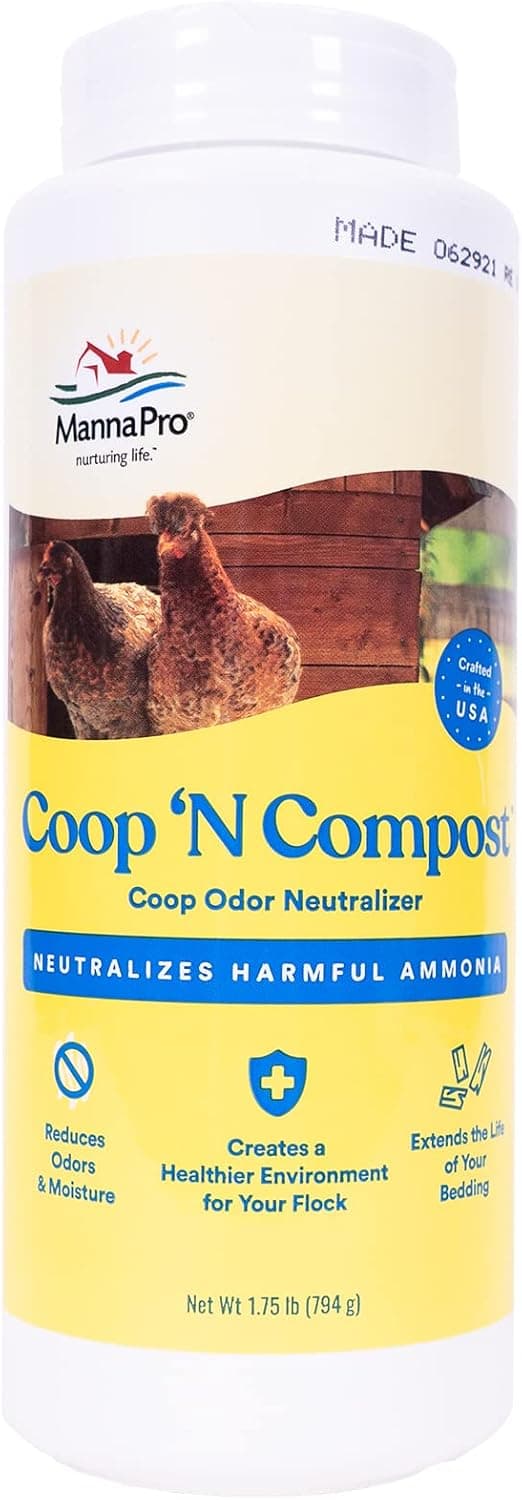
+ Absorbs moisture in bedding, which helps control ammonia smell
From our guide: Best Coop Deodorizers and Odor Control
Popular right now
- Best Poop Trays for Under RoostsBuying guide
- How Much Space Chickens Need in the Coop and RunArticle
- Free Ranging Chickens SafelyArticle
- Composting Chicken Manure SafelyArticle
- Best Nesting Pads for Nest BoxesBuying guide
- Broody Hens ExplainedArticle
Based on the last 28 days of search and visitor data.