Broody Hens Explained
Published How we research
A broody hen is in a hormonal state, staying in the nest almost around the clock, flattening herself, growling or pecking, and plucking her own breast feathers. Some breeds like Silkies and Cochins go broody readily while commercial hybrids rarely do. If you want chicks, a broody hen handles incubation and hatching herself over about twenty-one days; if you don't, break the broodiness early since a sitting hen loses condition. The standard fix is a wire-floored broody breaker cage that cools her breast with airflow underneath, usually working within two to four days. Distinguish a broody hen, alert and defensive, from a sick one, quiet and unresponsive. A broody hen has switched from laying eggs to trying to hatch them. It is a hormonal state, not a behaviour she chooses, and it can arrive whether or not there is a rooster in the flock or fertile eggs in the nest. Understanding what is happening makes it much easier to decide whether to let her sit, give her something to hatch, or gently talk her out of it.
The signs are hard to miss once you know them
The signs are hard to miss once you know them. A broody hen stays in the nest box almost around the clock, including overnight when the rest of the flock is on the roost. She flattens herself over the nest, fluffs up dramatically when you approach, and growls, hisses or pecks. She plucks feathers from her own breast so her bare skin can contact the eggs, and she collects eggs from other nests by rolling them underneath her. She leaves the nest only briefly, once or twice a day, to eat, drink and produce a notably large and pungent dropping. She stops laying entirely.
Broodiness has a strong breed component
Broodiness has a strong breed component. Silkies, Cochins, Orpingtons, Brahmas and many bantams go broody readily and make excellent mothers. Commercial hybrids and Mediterranean breeds like Leghorns rarely do, because the trait has largely been bred out of high-production lines. Warm weather, a full nest of eggs left sitting and lengthening days all make broodiness more likely.
If you want chicks, a broody hen is the easiest route
If you want chicks, a broody hen is by far the easiest route: she does the incubation, the hatching and the raising, with far less equipment and fuss than a brooder. Move her to a quiet, separate, predator-safe space at night, with her own food, water and a floor-level nest so chicks cannot fall out. Give her the eggs you want hatched all at once so they develop together. Make sure she gets off the nest daily to eat, drink and relieve herself, and keep her free of external parasites, which build up quickly on a sitting bird. Incubation takes about twenty-one days. Remember that roughly half of any hatch will be male, and think ahead about what you will do with cockerels, especially if roosters are not allowed where you live.
If you don't want chicks, there's a case for breaking it
If you do not want chicks, there is a good case for breaking the broodiness. A hen who sits for weeks loses body condition, eats and drinks far less than she should, is vulnerable to mites and does not lay. Left alone, a broody may persist for weeks and then simply start again. Breaking her early is kinder than letting her waste away on an empty nest.
The standard approach to breaking broodiness
The standard approach is to remove the conditions broodiness depends on: darkness, warmth, a soft nest and stillness. Collect eggs promptly so nothing accumulates under her, and lift her off the nest several times a day. If that fails, use a broody breaker, which is a wire-floored cage or crate raised on blocks so air circulates underneath, placed in a shaded, safe spot within sight of the flock. Provide food and water but no bedding and nothing nest-like. The airflow under her cools her breast, which is what actually interrupts the hormonal state. Most hens snap out of it within two to four days, after which they return to the flock and usually resume laying within a couple of weeks. Blocking access to the nest boxes during the day can also help.
Avoid folk remedies and know the difference from illness
Avoid the folk remedies involving dunking hens in cold water or handling them roughly. They stress the bird without addressing the mechanism any better than a well-ventilated crate does. And keep an eye on the difference between a broody hen and a sick one. A broody is alert, defends her nest and reacts strongly when disturbed. A hen who sits in the nest box but is quiet, unresponsive, straining, or has a swollen abdomen may have a reproductive problem and should be assessed by a poultry veterinarian or your local extension service.
Frequently asked questions
What are the signs of a broody hen? She stays in the nest box almost around the clock, flattens herself over the nest, fluffs up and growls or pecks when approached, plucks breast feathers, and stops laying entirely.
Which chicken breeds go broody most often? Silkies, Cochins, Orpingtons, Brahmas, and many bantams go broody readily and make excellent mothers, while commercial hybrids and Mediterranean breeds like Leghorns rarely do.
How do you break a broody hen? Remove the conditions broodiness depends on by collecting eggs promptly and lifting her off the nest; if that fails, use a wire-floored broody breaker cage that cools her breast with airflow, usually working within two to four days.
How long does it take eggs to hatch under a broody hen? Incubation takes about twenty-one days, and roughly half of any hatch will be male, so it's worth planning ahead for what to do with cockerels.
Products from this article
The highest-scoring picks from the buying guides mentioned above. Scores are our editorial assessment, not customer ratings.
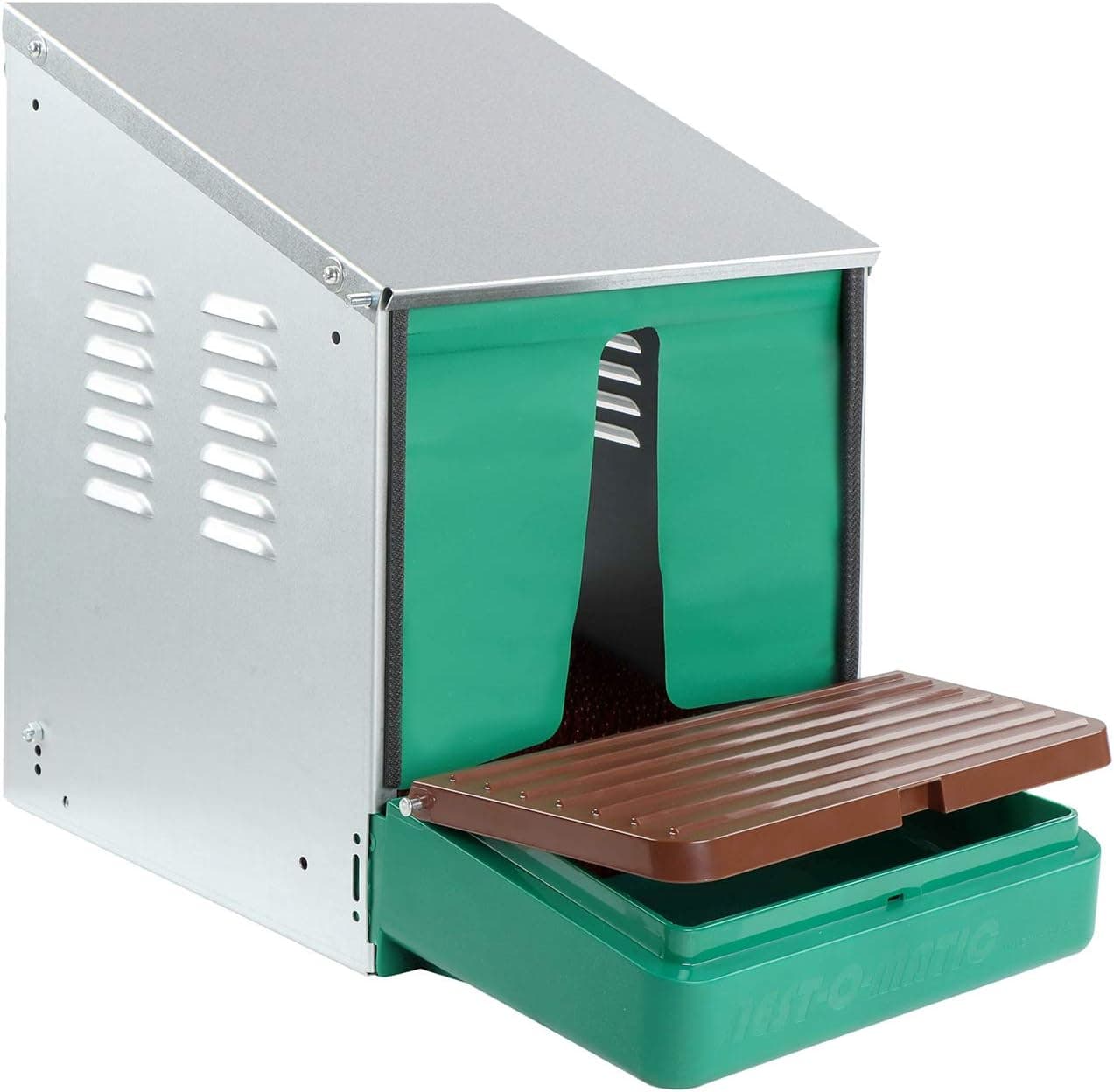
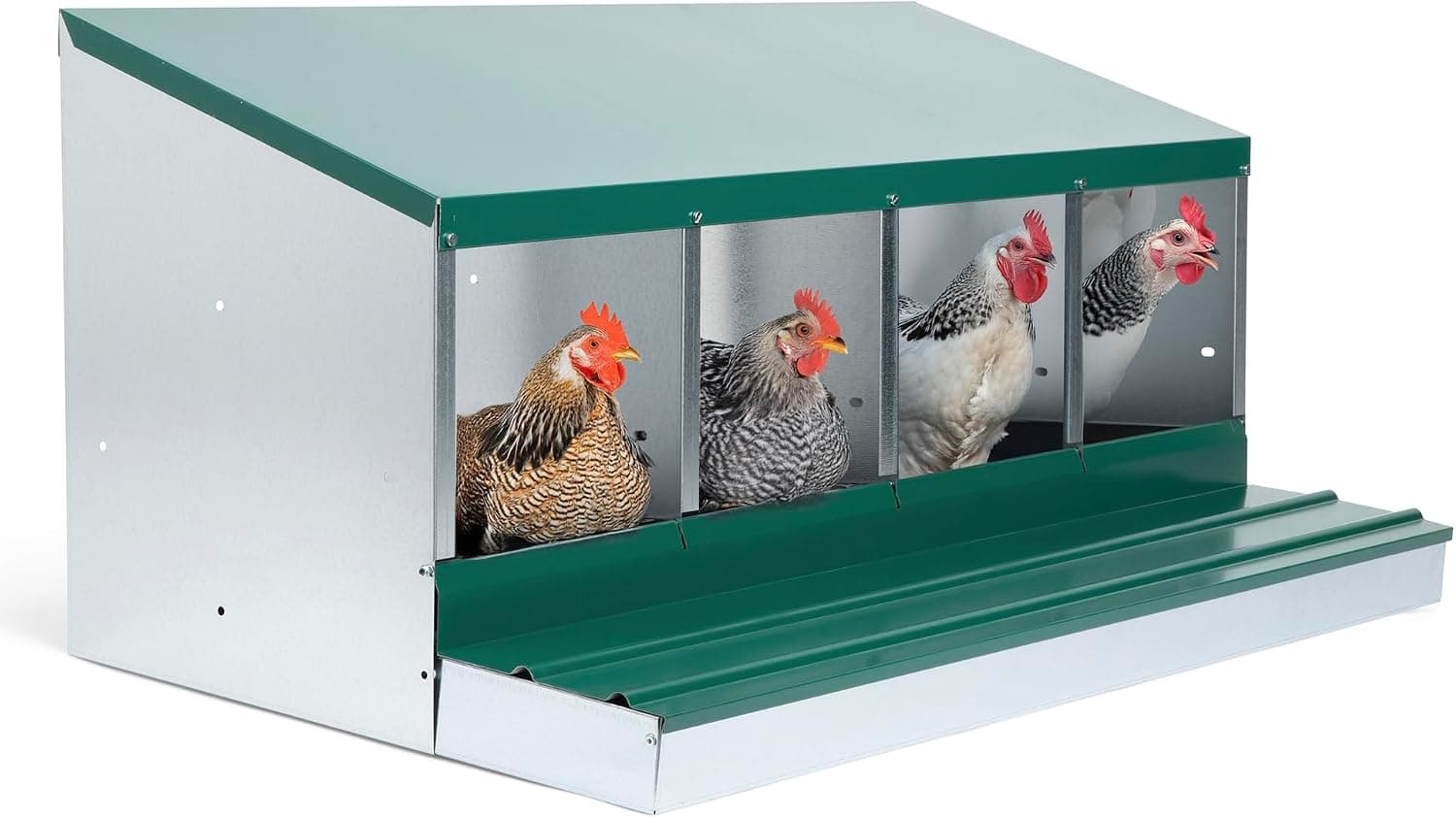
+ Forward rollout brings eggs to the front where you collect them easily
From our guide: Best Roll Away Nest Boxes
+ American made galvanized steel lasts for many seasons of use
From our guide: Best Nesting Boxes for Chickens
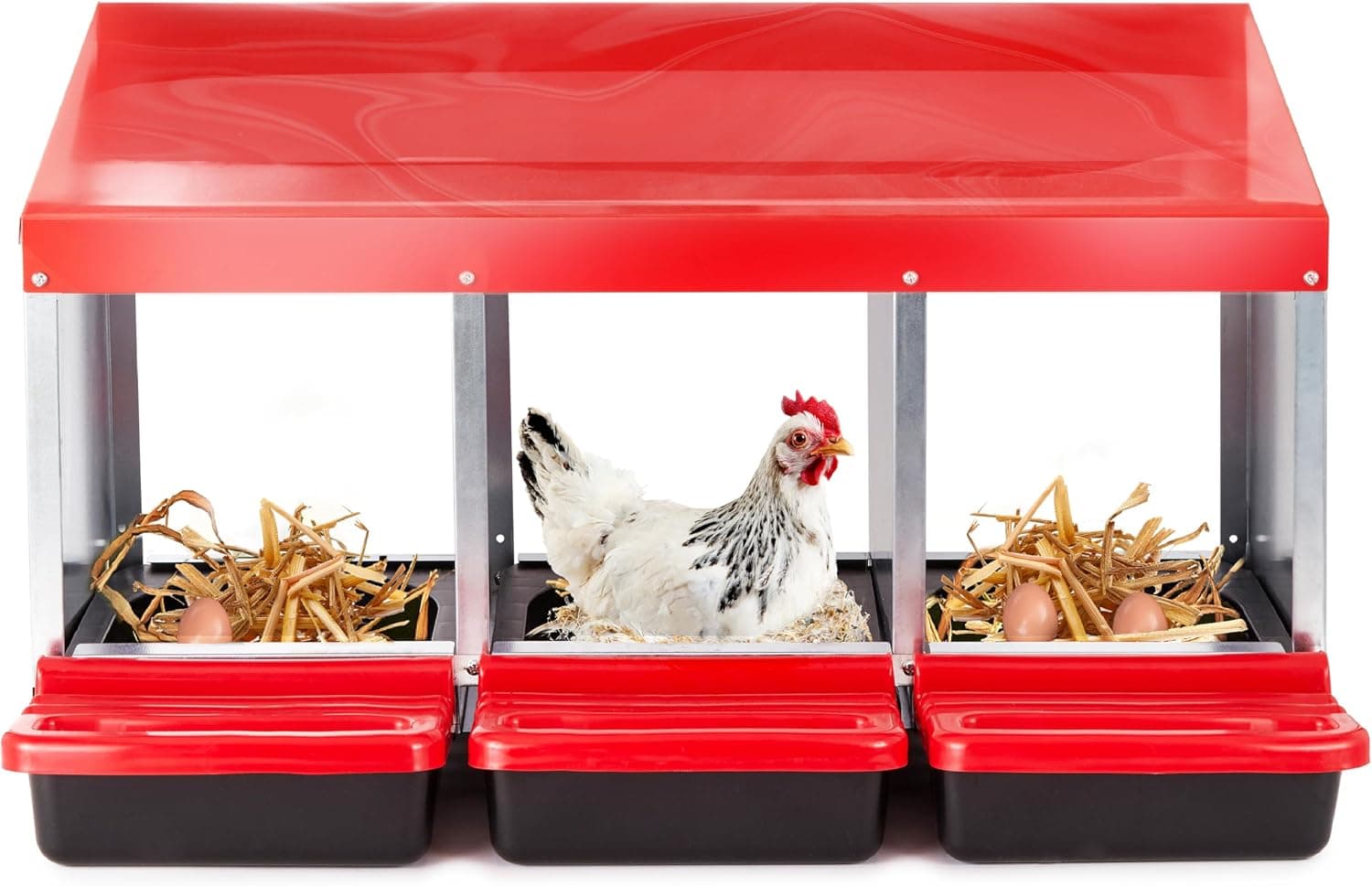
+ 3 wooden dummy eggs help show hens where to lay from day one
From our guide: Best Roll Away Nest Boxes
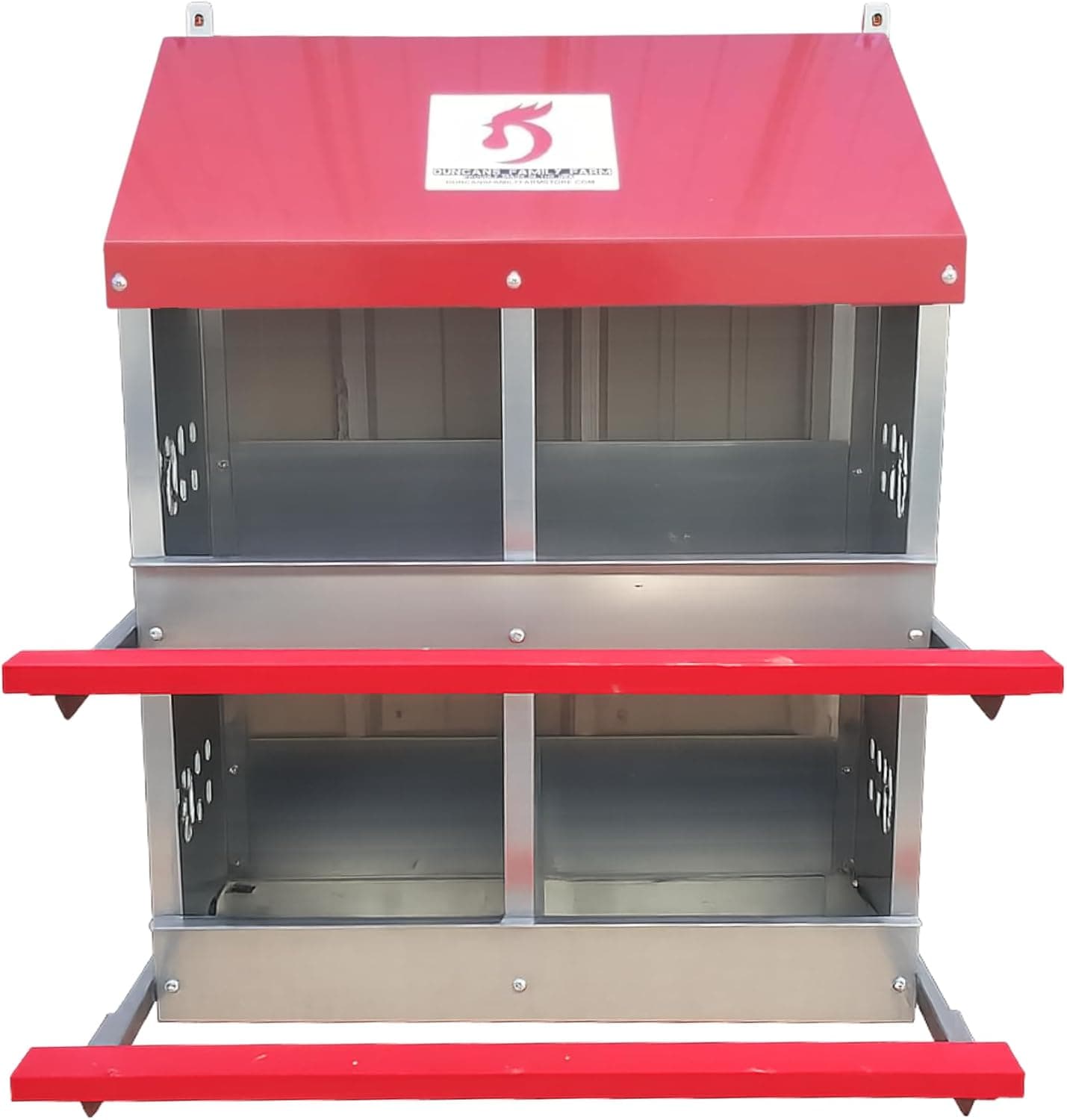
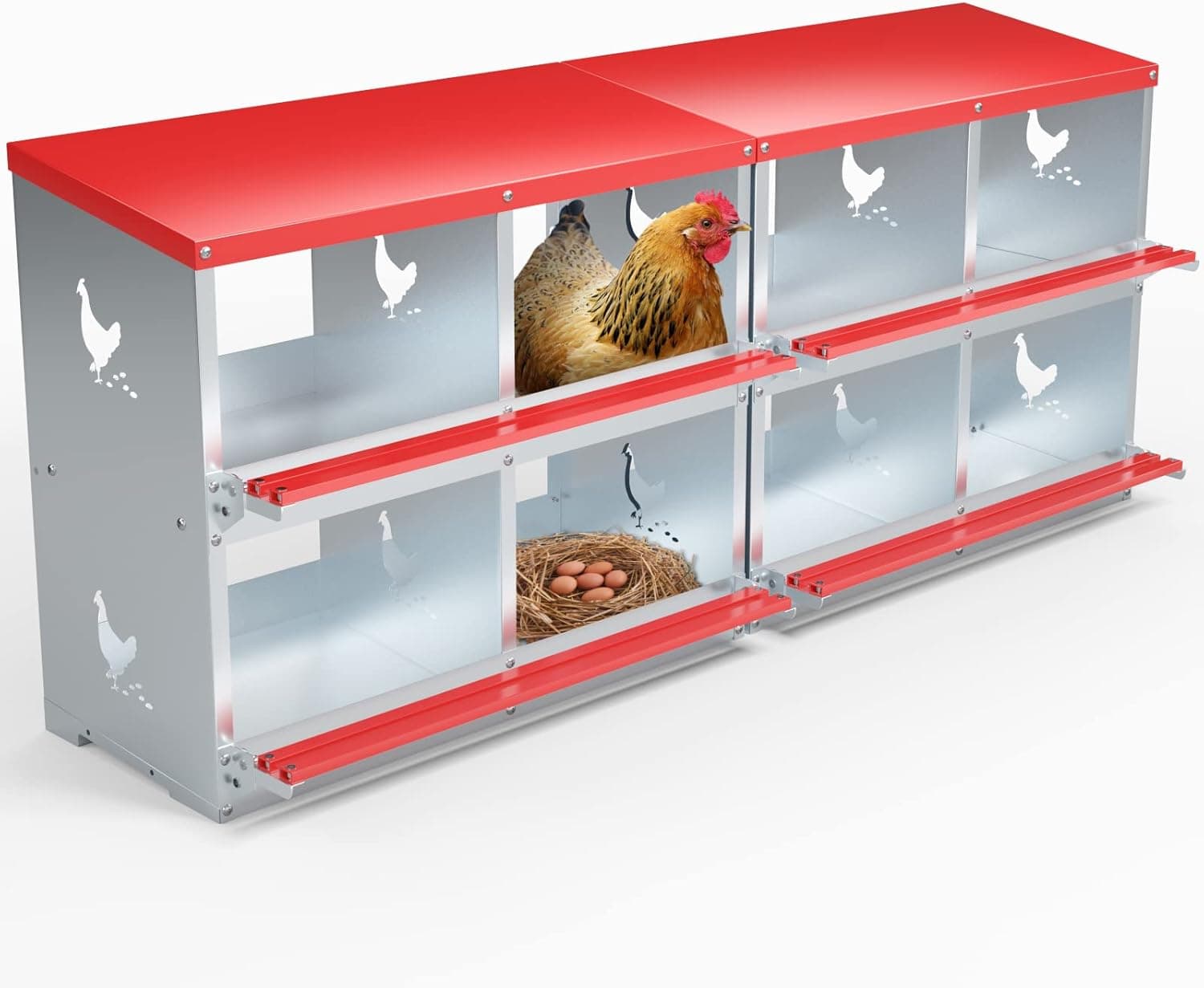
+ 8 compartments give a big flock room to lay without queuing
From our guide: Best Nesting Boxes for Chickens
Popular right now
- Best Poop Trays for Under RoostsBuying guide
- How Much Space Chickens Need in the Coop and RunArticle
- Free Ranging Chickens SafelyArticle
- Composting Chicken Manure SafelyArticle
- Best Nesting Pads for Nest BoxesBuying guide
- The Deep Litter Method ExplainedArticle
Based on the last 28 days of search and visitor data.