Dr. Orchard's Chicken Wound Spray for Chickens and Birds, Healing Aid and Skin Repair for Wounds, Pecking Injuries and Bumblefoot, 12 Ounces Review (2026)
Updated September 20, 2026 · Research-based review
Our verdict
A gentle, no-rinse wound spray for everyday flock first aid, covering pecking injuries, bumblefoot, and vent-area irritation in one bottle. The bigger 12 ounce size and no egg withdrawal period make it easy to keep on hand, though it comes from a small brand with limited outside track record.
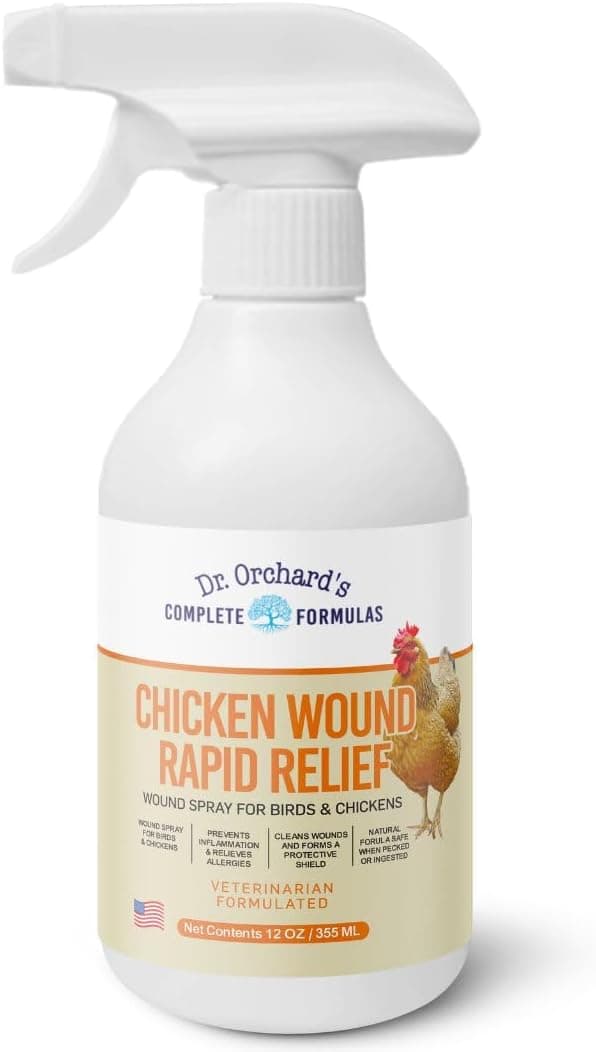
Dr. Orchard's chicken wound spray, 12 Ounces, a healing aid and skin repair spray for pecking injuries and bumblefoot.
Price range: $ (Budget)
What we liked
- + 12 Ounces bottle gives more spray than the smaller bottles in this guide
- + Targets pecking injuries, a frequent problem in crowded flocks
- + Skin repair focus supports recovery after bumblefoot care
Trade-offs
- - Lesser-known brand, so results are less documented
- - Not meant to replace vet care for deep or infected wounds
What it treats
Dr. Orchard's Chicken Wound Spray is formulated for everyday poultry first aid rather than one specific injury. The label and product listing describe it as a healing aid and skin repair spray for minor wounds, pecking injuries, bumblefoot care, and vent-area irritation, which covers most of the common skin problems a backyard keeper runs into. The formula is described as antibiotic-free and steroid-free, and the maker states it is non-stinging, which matters for a spray you may need to apply to a bird that is already stressed from an injury or from being picked on by flock mates. It is positioned as an everyday flock wellness product rather than a treatment reserved only for emergencies, so it can sit in a coop first aid kit alongside bandage wrap and other basics.
Size and value
This listing is the 12 ounce bottle, larger than the 8 ounce size common among competing wound sprays for chickens, so it holds more product for the same basic routine of spot-treating wounds as they come up. The maker states one bottle delivers well over two thousand sprays, which for a coop first aid kit used occasionally should last a long time before needing a refill. A larger bottle also means less frequent reordering if you keep a flock where pecking order squabbles or the occasional predator scare produce minor scrapes throughout the year. For a keeper managing several coops or a larger flock, the bigger size can work out to better value per spray than repeatedly buying smaller bottles of a rival brand.
How it is used
The spray is applied directly to the affected area with no rinsing required afterward, which keeps first aid simple during a quick coop check. The maker states there is no egg withdrawal period, meaning eggs from treated hens are described as safe to keep collecting and eating right away, unlike some antibiotic treatments that require you to discard eggs for a period after use. This makes it more practical for a small flock kept mainly for eggs, where taking a hen off the laying schedule is not something most backyard keepers want to do over a minor scrape. Because it is described as safe if pecked or accidentally ingested, it also suits flocks where treated birds cannot easily be isolated from flock mates during healing.
Brand and track record
Dr. Orchard's is a smaller, newer brand in the poultry care space compared with long-established names in chicken wound care, and it is listed as a small business seller on its Amazon listing. That means less independent, long-term feedback exists on how well it performs across a wide range of wound types and severities compared with bigger, more established competitors. Keepers who want the deepest track record and the most third-party data behind a product may lean toward a longer-standing brand, while those comfortable trying a newer formulation may find the larger bottle and no-withdrawal claim appealing enough to try it. As with any newer brand, it is worth keeping the original antiseptic or wound spray you already trust on hand until you have used this one through a few real situations.
Bottom line
This is a solid pick for a keeper who wants one spray that covers pecking injuries, bumblefoot, and vent-area irritation without worrying about egg withdrawal, and who values a bigger bottle for less frequent reordering. It is best treated as a first aid staple for minor, everyday issues rather than a substitute for veterinary care on a serious wound or infection. Given the newer brand, keep an eye on how a bird responds after the first use, as you would with any new product introduced to your coop first aid kit, and escalate to a vet if a wound is deep, infected, or not improving within a few days of routine spot treatment.
Frequently asked questions
Does it work on bumblefoot?
Yes, the maker lists bumblefoot care as one of the intended uses alongside pecking injuries and vent-area irritation, though a swollen or infected case should still be checked by a vet.
Is there an egg withdrawal period?
No, the maker states there is no egg withdrawal period, so eggs from a treated hen can keep being collected and eaten as normal.
How many sprays are in one bottle?
The maker states one 12 ounce bottle delivers over two thousand five hundred sprays, which should cover routine first aid use for a long time.
Does it sting when applied?
The maker describes the formula as gentle and non-stinging, intended to be comfortable to apply to an already irritated area.
Prices change often, so check the current price and availability on Amazon.
Check price on AmazonChicken Coop Nest may earn a commission from the link above.