Dr. Naylor Blu-Kote Pump Spray, 4 oz, Fast Drying Antiseptic Wound Dressing Review (2026)
Updated September 14, 2026 · Research-based review
Our verdict
Blu-Kote is a decades-old barn store staple that dries fast over minor wounds and dyes the area purple-blue, which helps discourage other birds from pecking at an injury, making it a sound addition to a coop first aid kit, though the dye stains skin, feathers and fabric on contact.
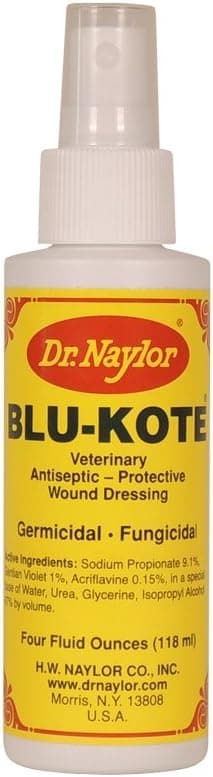
Dr. Naylor Blu-Kote 4 oz pump spray, a fast drying antiseptic wound dressing whose blue color hides wounds from peckers.
Price range: $ (Budget)
What we liked
- + Blue dye masks red wounds, which helps stop other hens pecking
- + Fast drying antiseptic dressing protects scrapes quickly
- + Long-standing barn staple found in many farm stores
Trade-offs
- - Purple-blue dye stains hands, clothes and light feathers
- - Check egg and meat use guidance on the label before treating layers
Who this product fits
Any keeper who has dealt with a hen getting picked at after a small injury will understand the appeal of Blu-Kote, since chickens are drawn to red and will peck at an open wound on a flockmate, sometimes making a minor scrape worse. The dye in this spray covers the wound in a dark purple-blue color that visually hides the red, which in practice reduces how much attention other birds pay to an injured bird while it heals. This makes it especially useful for keepers running a mixed flock where pecking order dynamics are already a factor, rather than someone with just one or two birds kept separately, though it is still worth having on hand at any flock size for scrapes from fencing, predator encounters or rough introductions.
What the product does
Blu-Kote is sold as a fast drying antiseptic wound dressing, formulated to form a protective coating over the treated area that helps reduce pus formation, dry up minor secretions and support control of secondary infection on the surface. It has been sold by H.W. Naylor Company for many years and is a recognizable product across farm supply stores, not a new or unproven formula. This 4 oz size comes in a pump spray format, which makes it easier to apply without direct hand contact compared with a dauber applicator, useful when treating a bird that may flinch or move during application. As with any topical treatment, following the label directions and checking guidance on use around eggs intended for consumption is worth doing before treating actively laying hens.
Living with it: application and care
The pump spray format sprays a fine mist rather than a liquid stream, which helps cover an area like a peck wound or minor abrasion without soaking the surrounding feathers more than necessary. Because the dye is strong, it is worth wearing gloves or old clothes during application, since Blu-Kote will stain hands, fabric and light colored feathers on contact and does not wash out easily once it sets. Keepers should apply it in a well-ventilated area away from anything they do not want dyed, and store the bottle somewhere chicks or curious pets cannot knock it over, since a spilled bottle can leave a lasting purple stain on flooring or bedding.
Trade-offs and how it compares
Against Vetericyn Plus Poultry Care Spray, which is formulated as a broader healing aid for wounds, pecking injuries, bumblefoot and vent prolapses without a dye component, Blu-Kote's main advantage is specifically the color-masking effect that discourages pecking, something Vetericyn does not attempt to do. Vetericyn scores higher in this lineup partly because it treats a wider range of poultry-specific conditions, while Blu-Kote is more of a general antiseptic dressing with a long track record across livestock species rather than a poultry-specific formula. Compared with newer plant based wound sprays marketed specifically to chicken keepers, Blu-Kote is a more old-school option, effective but with the staining trade-off that newer dye-free formulas avoid.
Verdict and who should look elsewhere
For keepers who want an affordable, proven antiseptic that also helps stop flockmates from picking at a healing wound, Blu-Kote earns its long shelf life at farm stores and supports our score of 8.6/10 for fit in a coop first aid kit. Anyone treating a wound near the vent, dealing with bumblefoot, or looking for a formula marketed specifically for poultry conditions may get more targeted results from a dedicated poultry wound spray like Vetericyn. Keepers who cannot tolerate staining on light feathered breeds, coop bedding or their own hands should also consider a clear antiseptic instead, saving Blu-Kote for situations where the pecking deterrent effect is the priority.
Frequently asked questions
Why does Blu-Kote turn the wound purple-blue?
The dye in the formula is what gives Blu-Kote its color, and that color helps mask the red of an open wound, which discourages other chickens from pecking at an injured flockmate while it heals.
Does Blu-Kote stain feathers permanently?
It can leave a visible stain on light colored feathers and skin for some time since the dye is strong, so avoid spraying more than the wound area itself if you want to limit staining.
Is Blu-Kote safe to use on laying hens?
Check the product label for current guidance on use around eggs intended for consumption before treating actively laying hens, since directions can vary by use case.
Is the pump spray better than the dauber version?
The pump spray applies a fine mist without direct contact, which some keepers prefer for treating a flinching or mobile bird, while the dauber gives more targeted, controlled placement on a small spot.
Prices change often, so check the current price and availability on Amazon.
Check price on AmazonChicken Coop Nest may earn a commission from the link above.