Vetericyn Plus Poultry Care Spray, Healing Aid and Skin Repair for Chicken Wounds, Pecking Injuries, Bumblefoot and Vent Prolapses, 8 Ounces Review (2026)
Updated September 14, 2026 · Research-based review
Our verdict
Vetericyn Plus Poultry Care Spray suits pecking wounds, bumblefoot and minor vent irritation, since its hypochlorous acid formula needs no rinsing and carries no egg withdrawal period. It costs more per bottle than basic antiseptic sprays, and deeper wounds or serious prolapse still call for a vet.
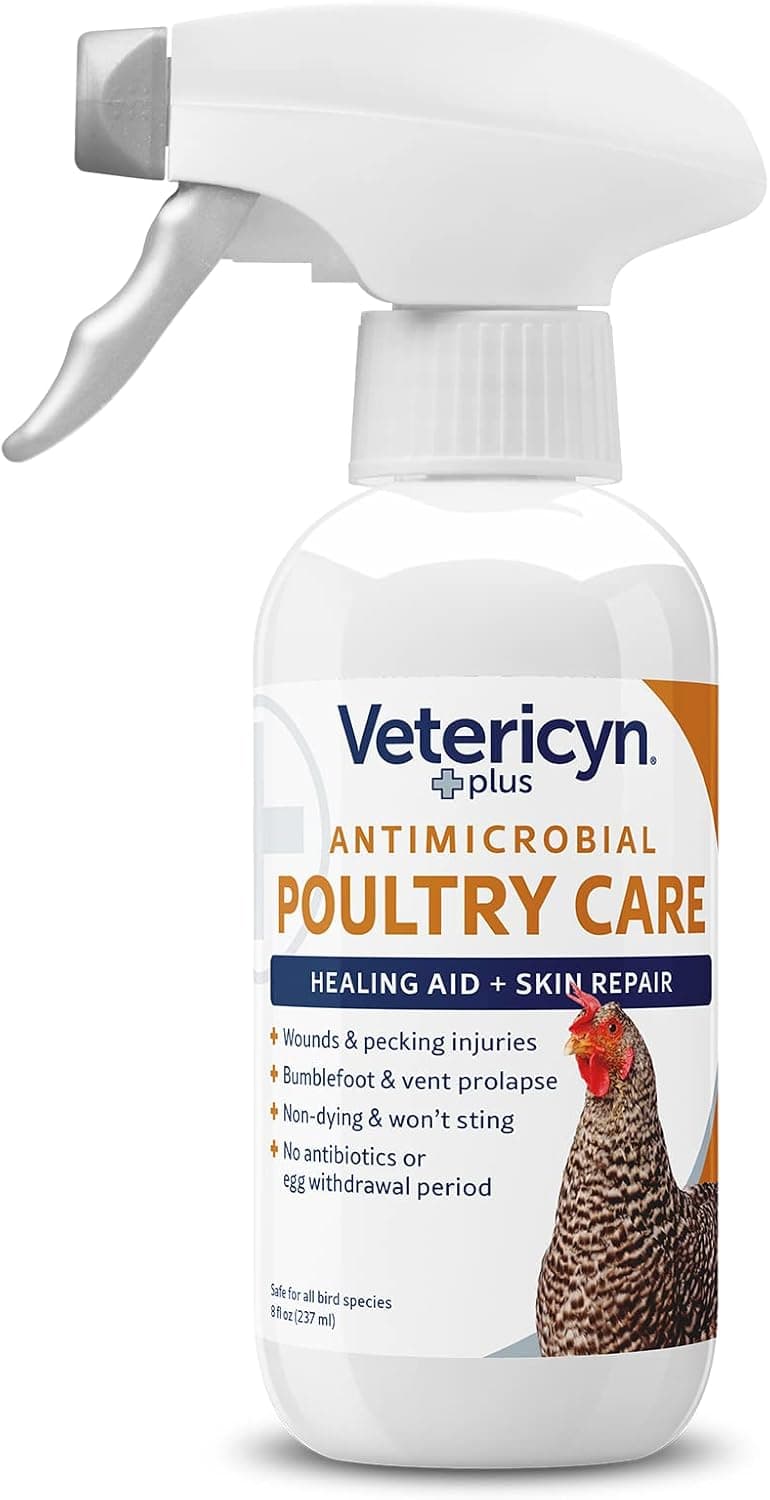
Vetericyn Plus Poultry Care Spray, 8 Ounces, a healing aid for wounds, pecking injuries, bumblefoot and vent prolapse.
Price range: $ (Budget)
What we liked
- + Treats pecking wounds, bumblefoot and vent issues in one bottle
- + Vetericyn is a widely trusted animal wound care brand
- + Spray application avoids touching sore areas directly
Trade-offs
- - Premium price for an 8 Ounces bottle
- - Serious prolapses and deep wounds still need a vet visit
Who this spray is for
This spray fits keepers who want a general-purpose wound care product on hand for the everyday injuries a flock produces, from pecking order scuffles to scraped feet. Because the formula addresses cuts, pecking wounds, bumblefoot and vent prolapse under one label, it covers most of the minor first-aid situations a backyard coop runs into without needing several different products. The no rinse, no egg withdrawal formulation matters most to keepers who are actively collecting and eating eggs from treated hens and do not want to discard eggs during treatment. Anyone dealing with a genuinely serious wound, deep bumblefoot infection or advanced prolapse should treat this as a supporting tool alongside veterinary care rather than a stand-alone fix, since the maker's own directions describe it as a wound care aid, not a cure for underlying medical conditions. For everyday coop first-aid kits, though, it is a broad-coverage option worth keeping on the shelf.
What is in the bottle and how it works
The active ingredient is hypochlorous acid at 0.0120 percent, with inactive ingredients including electrolyzed water, sodium chloride, phosphates and sodium hypochlorite. Hypochlorous acid is a compound the body's own immune cells produce to fight infection, and Vetericyn's poultry formula is built around that same chemistry in spray form. The product contains no antibiotics, which is why the maker states there is no egg withdrawal period required after use, unlike some antibiotic-based treatments. It comes in an 8 ounce bottle with a spray nozzle, sized for a coop first-aid kit rather than large-scale flock treatment. Because it is described as non-toxic and free of antibiotics, it is positioned as safe to reach for on minor wounds without the same withdrawal concerns that come with antibiotic ointments or sprays.
How to use it and what owners should expect
Directions call for clearing feathers away from the affected area, trimming feathers if needed, then adjusting the spray nozzle and saturating the wound to flush away debris. If a wound needs a dressing, the same spray is used to re-saturate the dressing at each change rather than switching products. The maker's directions call for repeating application 3 to 4 times per day until the wound heals, and no rinsing is needed after each application, which keeps the routine simple compared to products requiring a rinse step. Because the formula is described as non-irritating and pain-free on application, it can be used on sensitive areas like the head and vent without the sting some antiseptics cause, which matters when treating an already stressed or injured bird. As with any wound spray, watching for signs a wound is not improving after a few days of consistent use is the signal to escalate to a vet rather than continuing home treatment alone.
Trade-offs and how it compares to rivals
The main trade-off is price: an 8 ounce bottle of Vetericyn costs more than basic antiseptic sprays that only treat surface cuts, though the wider range of conditions it covers, from bumblefoot to vent prolapse, is part of what justifies the higher per-bottle cost. Among rivals in the same poultry first aid guide, Dr. Naylor's Blu-Kote Pump Spray is a fast-drying antiseptic wound dressing in a smaller 4 ounce size, a more budget option for keepers who mainly want a basic cut treatment. Dr. Orchard's Chicken Wound Spray covers similar ground to Vetericyn, pecking injuries, bumblefoot and skin repair, in a larger 12 ounce bottle. For keepers who want a broader coop health kit rather than just wound spray, Poultry Nutri-Drench in the flock health supplies guide addresses nutritional support rather than wound care, making it a complement to Vetericyn instead of a substitute.
Verdict and who should still call a vet
Vetericyn Plus Poultry Care Spray earns its top rank in the best poultry first aid supplies guide because it treats pecking wounds, bumblefoot and vent issues from one trusted, no-rinse, no-withdrawal bottle, backing up our score of 9.2 out of 10. It is a sound pick for any keeper building a coop first-aid kit who wants broad coverage without juggling several specialty sprays. Keepers facing a serious prolapse, a deep or infected bumblefoot case, or a wound that is not improving after several days of consistent spray treatment should treat this product as first response only and bring in an avian vet for anything beyond minor injuries. For everyday scrapes and pecking order injuries, though, it is a reasonable staple to keep on hand.
Frequently asked questions
Does Vetericyn Plus Poultry Care Spray require an egg withdrawal period?
No, the maker states there is no egg withdrawal period since the formula contains no antibiotics.
What conditions is this spray meant to treat?
The label covers cuts, pecking wounds, bumblefoot and vent prolapse, applied by saturating the affected area 3 to 4 times a day until healed.
Do I need to rinse the spray off after applying it?
No, the directions state no rinsing is necessary after application.
Can this spray replace a vet visit for a serious wound or prolapse?
No, it is a wound care aid for minor injuries. Serious prolapses or deep, infected wounds still need an avian vet's attention.
Prices change often, so check the current price and availability on Amazon.
Check price on AmazonChicken Coop Nest may earn a commission from the link above.