Sun Joe Premium Chicken Coop Sand, Coarse Grade, Washed, Screened and Dried, 50 Lb Bag - Fast-Draining, Non-Clumping, and Natural Mineral Poultry Bedding Accessories for Chicks and Chickens CHKSAND50 Review (2026)
Updated September 20, 2026 · Research-based review
Our verdict
A washed and dried coarse sand built specifically as coop bedding rather than repurposed construction or play sand. It drains fast and sifts easily for daily scooping, but 50 pound bags are heavy to carry and several bags are usually needed to cover a coop floor.
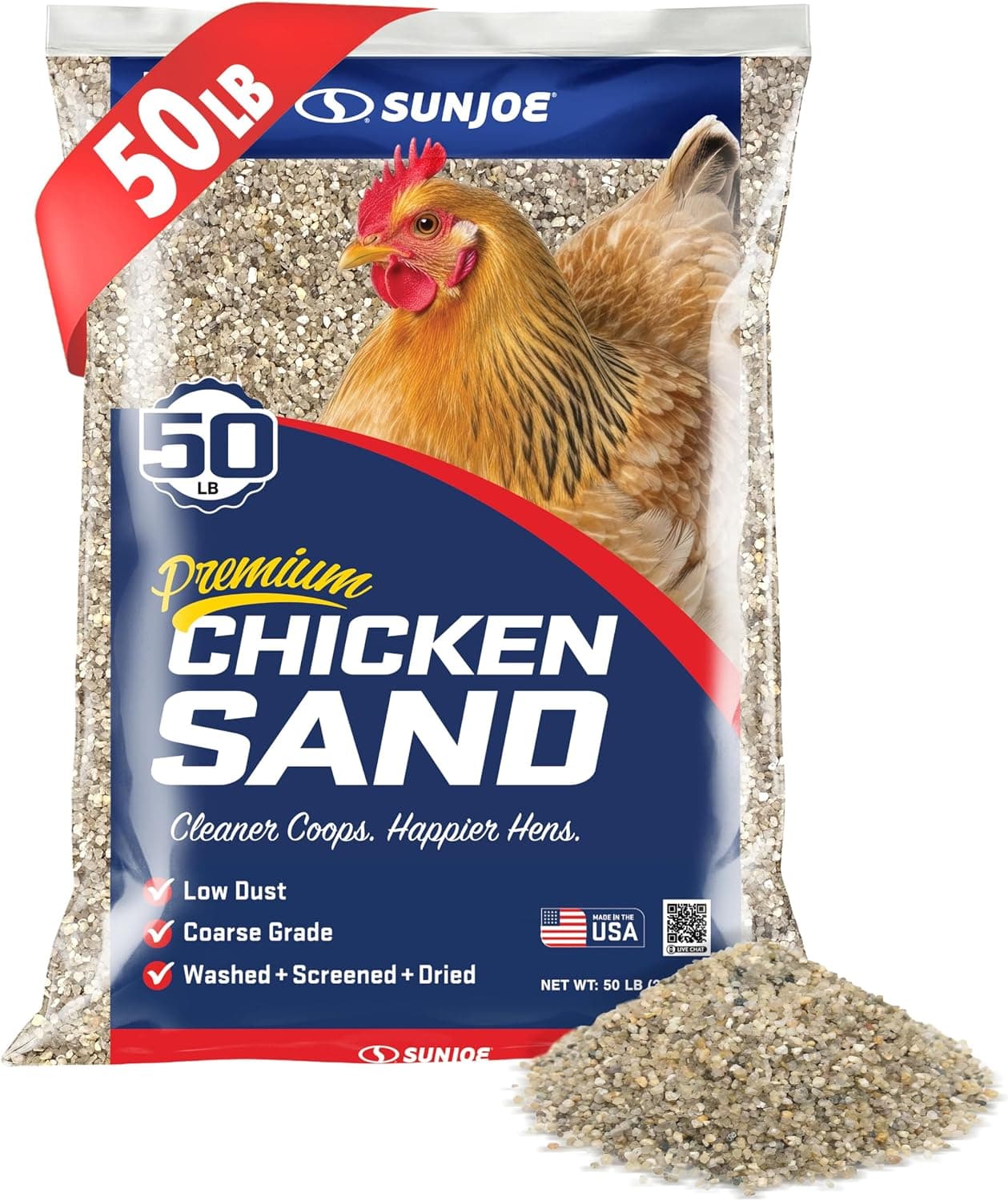
Sun Joe Premium coarse grade coop sand in a 50 Lb bag, washed, screened and dried for fast-draining poultry bedding.
Price range: $ (Budget)
What we liked
- + Coarse grade drains quickly, which helps keep runs from turning muddy
- + Washed, screened and dried sand is cleaner than raw construction sand
- + Non-clumping texture is easy to sift for daily poop scooping
Trade-offs
- - 50 Lb bags are heavy, and a coop floor may need several
- - Sand holds cold in winter, so some keepers add straw on top
What this sand is
Sun Joe's coop sand is mined from natural mineral deposits near Mauricetown, New Jersey, then washed, screened and dried before bagging, rather than being sold as raw pit sand. That processing removes fine silt and dust that would otherwise cling to coarse sand grains, which matters in a coop because airborne dust from unwashed sand can irritate a chicken's respiratory system over time. The coarse grade means the individual grains are larger than typical play sand or mason sand, giving the material a free-flowing structure that resists packing down into a hard, compacted layer the way finer sand can.
Drainage and dust control
The coarse, washed grain structure is built to let moisture pass through and evaporate quickly rather than pooling on the surface, which helps keep a coop floor or run drier between cleanings compared to straw or shavings that hold onto moisture. The maker also markets the sand as low-dust, aimed at reducing the amount of fine particulate a flock breathes in day to day, since standard construction sand can carry more silica dust than material that has been specifically washed and screened for this kind of use. A drier, lower-dust floor also tends to control ammonia odor better than damp organic bedding, since ammonia forms more readily in wet, decomposing material.
Using it as the sand method for coop litter
Sand is a well-known deep-litter alternative among poultry keepers, often called the sand method, because its non-clumping texture lets droppings be sifted out daily with a kitty litter scoop or garden rake rather than needing a full bedding change. A coarse, non-clumping sand like this is easier to sift than fine sand, since waste tends to sit on top of the larger grains rather than binding into it. The bag itself states this material is intended for chicken coop and run bedding rather than for sandblasting, potting soil, or other construction uses, so it is worth confirming the coverage needed for your coop before ordering multiple bags.
How many bags you will likely need
A 50 pound bag covers a modest area at a couple of inches deep, so most coop floors beyond a very small starter coop will need several bags to build up a usable litter depth. That adds real weight to carry and pour, and it also adds to the total cost compared to straw or shavings on a per-bag basis, even though sand needs replacing far less often once it is down. The maker notes the bag should be stored in a dry area to keep it from clumping in storage, and states the product is sold as final sale, so it is worth measuring your coop footprint and estimating bag count before buying rather than ordering piecemeal.
Who this bedding suits
This sand suits keepers who already like the sand method for coop litter and want a bagged product that has been washed and screened specifically for poultry use rather than a generic construction sand bag from a hardware store. It is a good match for anyone dealing with a muddy run or persistent ammonia smell from shavings that hold too much moisture. Keepers on a tight budget or with a very large coop footprint may find the per-bag cost adds up quickly compared to straw, and those in cold climates should be aware that sand holds less insulating warmth than deep straw, so some add a straw layer on top going into winter.
Frequently asked questions
How is this different from regular construction sand?
It is washed, screened and dried specifically for coop use, which removes more dust and fine silt than raw construction or play sand typically carries.
How many bags do I need for my coop?
A 50 pound bag covers a limited area at a couple of inches deep, so most coops need several bags. Measure your floor area before ordering.
Can this sand be used with the deep litter or sand method?
Yes, the coarse, non-clumping texture is suited to daily sifting with a scoop or rake, which is how the sand method for coop litter is typically maintained.
Does sand get cold in winter?
Sand holds less warmth than deep straw bedding, so some keepers add a layer of straw on top of the sand floor during cold months.
Prices change often, so check the current price and availability on Amazon.
Check price on AmazonChicken Coop Nest may earn a commission from the link above.