RentACoop 300L Hemp Bedding for Chickens, Rabbits and Guinea Pigs, Super Absorbent Low Dust Odor Control Review (2026)
Updated September 14, 2026 · Research-based review
Our verdict
RentACoop's 300 liter hemp bedding is a strong choice for keepers prioritizing absorbency and lower dust over pine shavings, with hemp fiber that soaks up moisture well and works across chickens, rabbits and guinea pigs, though hemp bedding costs more upfront than a comparable bale of pine shavings.
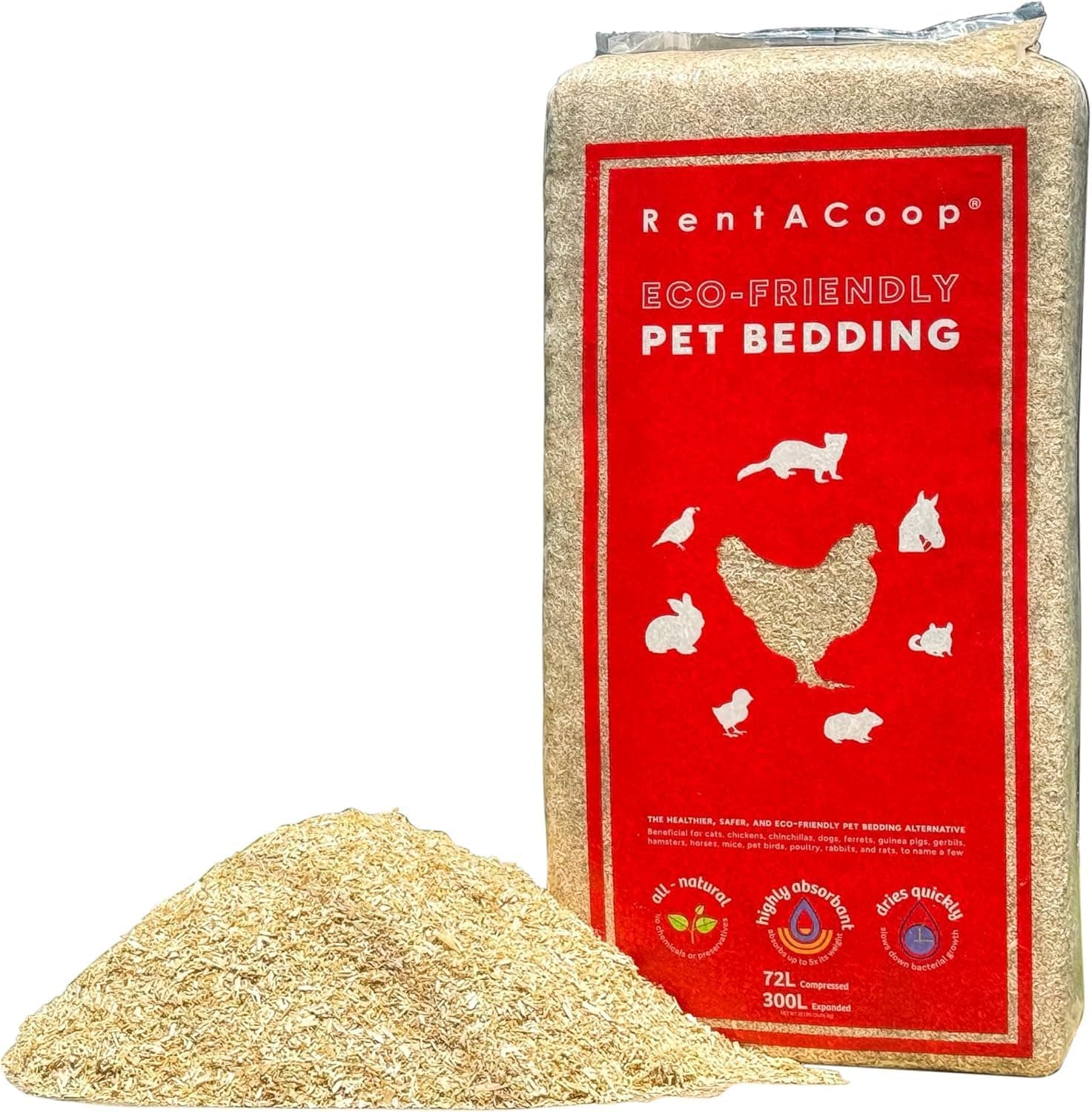
RentACoop's 300L hemp bedding for chickens, rabbits and guinea pigs, a super absorbent, low dust coop litter.
Price range: $ (Budget)
What we liked
- + Super absorbent hemp keeps the coop floor drier between cleanouts
- + Low dust formula is gentler on chicken respiratory systems
- + 300L volume covers a small coop floor in a good deep layer
Trade-offs
- - Hemp bedding costs more upfront than bales of pine shavings
- - Compressed bedding needs breaking up and fluffing before use
Who this product fits
Keepers who have used pine shavings and want to try an upgrade, particularly anyone dealing with a bird sensitive to dust, are the main audience for hemp bedding like this RentACoop bag. Because the same bedding works for chickens, rabbits, guinea pigs and other small animals, households running a mixed setup of chickens alongside other small pets can standardize on one bedding type rather than buying different products for different animals. Keepers on a tight budget who have not had dust or odor problems with cheaper pine shavings may not see enough benefit to justify the higher price of hemp, and could reasonably stick with what is already working rather than switching bedding types.
What the specs mean day to day
A 300 liter bag weighs around 30 pounds and expands to roughly 10.6 cubic feet, covering about 60 square feet of coop floor at a 2 inch depth, which gives a clear planning number for how much a single bag will cover compared with guessing at coverage from bag volume alone. The hemp fibers are described as extra soft and rounded, aimed at being gentle on feet and feathers, and the material is marketed as naturally absorbing several times its weight in moisture, a meaningful claim for keeping a coop floor drier between cleanouts than shavings that saturate more quickly. Hemp is also generally described as less hospitable to mites than straw or some other traditional bedding, though this depends on overall coop cleanliness and is not a substitute for a regular pest management routine.
Living with it: use and storage
Straight out of the bag, compressed hemp bedding needs to be broken up and fluffed before spreading, since it ships compacted to save shipping volume, and skipping this step leaves the bedding in dense clumps that do not spread or absorb evenly. Once fluffed and spread, hemp's higher absorbency generally means fewer full bedding changes are needed compared with pine shavings, which can help offset some of the higher upfront cost over time even though the bag itself costs more. Dust levels are marketed as low, though as with any bedding material, some variation in dust can occur between batches, so keepers with birds especially sensitive to airborne particles should watch how their flock responds during the first bag before committing to hemp long term.
Trade-offs and how it compares
Against Small Pet Select's pine shavings 2 pack, hemp bedding is the pricier option per liter but offers stronger absorbency claims and a different, softer texture underfoot, which is the trade-off keepers are weighing when choosing between the two. Against Dominion Hemp's 285 liter bag, a close competitor in size and material, RentACoop and Dominion are similar enough in absorbency and dust claims that keepers may end up choosing based on price or brand preference more than a meaningful performance gap. Compared with Carolina Coops' hemp bedding, which expands to a similar cubic footage, RentACoop's 300 liter size is a comparable option in the same tier of hemp bedding products rather than a clear standout on raw specs.
Verdict and who should pick something else
For a keeper who wants better absorbency and lower dust than pine shavings and does not mind paying more per bag, RentACoop's hemp bedding is a well-specified option that supports our score of 8.4/10 for fit and features. Budget-focused keepers without an active dust or odor problem may not need to switch away from cheaper pine shavings. Anyone trying hemp bedding for the first time should plan on breaking up the compressed material before spreading it, and keepers who have previously found a particular batch of hemp bedding surprisingly dusty should watch their first bag closely rather than assuming every batch performs identically.
Frequently asked questions
How much floor area does a 300 liter bag of hemp bedding cover?
It expands to roughly 10.6 cubic feet and covers about 60 square feet at a 2 inch depth, which is a useful starting point for estimating how many bags a coop needs.
Does hemp bedding need to be prepared before use?
Yes, it ships compressed and should be broken up and fluffed before spreading so it absorbs evenly rather than sitting in dense clumps.
Is this bedding only for chickens?
No, it is designed to work for chickens as well as rabbits, guinea pigs and other small animals, so it can be used across a mixed household of pets.
Is hemp bedding worth the higher price compared with pine shavings?
It depends on your priorities. Hemp generally offers stronger absorbency and lower dust, which can mean fewer bedding changes, but pine shavings remain the more budget-friendly traditional option.
Prices change often, so check the current price and availability on Amazon.
Check price on AmazonChicken Coop Nest may earn a commission from the link above.