The Chicken Health Handbook, 2nd Edition: A Complete Guide to Maximizing Flock Health and Dealing with Disease by Gail Damerow Review (2026)
Updated September 14, 2026 · Research-based review
Our verdict
The Chicken Health Handbook, 2nd Edition is the reference to reach for once a flock is established and questions shift from housing to symptoms and disease. Gail Damerow's detailed, illness-by-illness structure rewards a keeper willing to work through dense material, though brand-new owners may want a general care book alongside it.
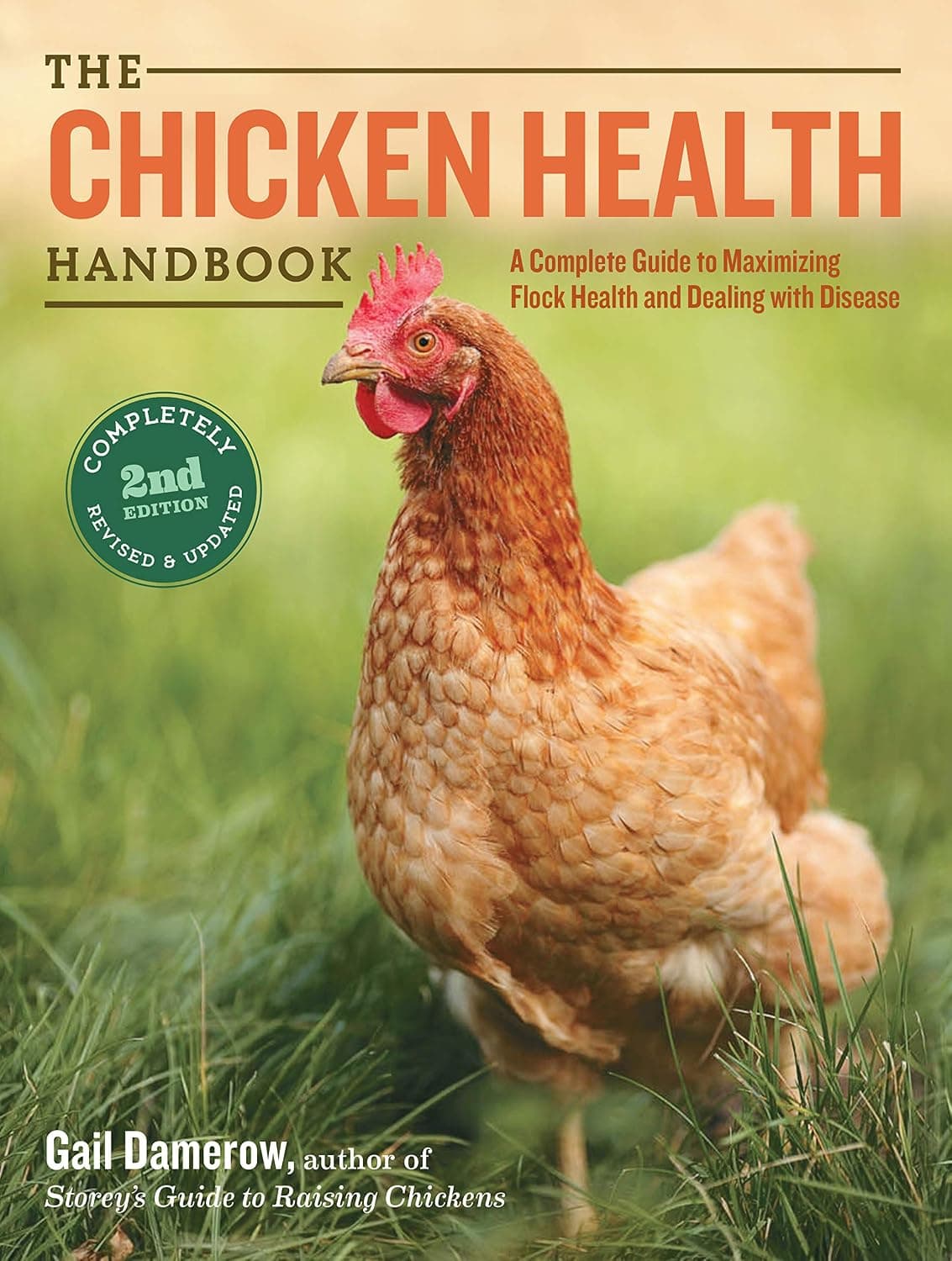
The Chicken Health Handbook, 2nd Edition by Gail Damerow, a complete guide to flock health and dealing with disease.
Price range: $ (Budget)
What we liked
- + Focused health guide helps you spot and act on illness early
- + 2nd Edition updates the content for current flock health practice
- + Pairs well with a general care book for full coverage
Trade-offs
- - Disease detail can be overwhelming for brand-new keepers
- - Not a replacement for an avian vet in serious cases
Who this health guide is for
This book is built for keepers who already have birds on the ground and need a focused reference for spotting and responding to illness, rather than a general introduction to getting started. Gail Damerow organizes the handbook around the health problems chickens of all breeds and ages can face, with practical charts identifying common symptoms and causes alongside an alphabetic listing of diseases and treatment advice. That structure suits someone who notices something off with a bird and wants to work from symptom to likely cause, rather than reading straight through before trouble starts. Because it pairs well with a general care book covering housing and feeding, it works best as a second reference added to a keeper's shelf rather than the only chicken book someone owns. Total beginners who have not yet dealt with a sick bird may find the disease-by-disease detail more than they need on day one.
What the 2nd edition covers
Published by Storey at 496 pages in trade paperback, the 2nd edition expands on the original with new topics, updated existing material, and added illustrations and photos to help explain difficult health topics visually. Coverage spans nutrition and reproductive issues alongside a full range of health problems, plus guidance on practicing preventive health care and using natural approaches to support a flock's immune system. It also addresses newsmaking diseases such as avian flu and gives specific attention to raising healthy chickens in an urban environment, which matters for keepers working with smaller lots and closer neighbors. The symptom charts and alphabetic disease listing format let a keeper narrow down what they are seeing in a bird and cross-reference likely causes, rather than reading a linear narrative. Author Gail Damerow has written more than a dozen poultry and livestock books, including Storey's Guide to Raising Chickens, which shares overlapping but distinct territory with this health-focused volume.
Using it when a bird gets sick
In practice, this handbook works best kept within reach for the moment a keeper notices something wrong, a bird not eating, an odd stance, discharge or a wound, and needs to move from observed symptom to a likely explanation quickly. The symptom charts are designed for that lookup style of use rather than cover-to-cover reading, so familiarity with the book's layout before an emergency helps you find the right section faster when it matters. Because it is a print reference without a built-in search function, spending some time with the table of contents and index ahead of any health issue pays off later. The urban chicken keeping material is useful for anyone managing a flock on a smaller property, since space and neighbor considerations can shape which preventive measures are practical. As a companion to a general care book, it fills the specific gap those broader guides tend to cover more lightly: what to do once a bird is actually showing signs of illness.
Trade-offs and how it compares to other keeper books
The trade-off with this level of disease detail is that it can feel overwhelming for someone brand new to chickens who has not yet developed a baseline sense of normal flock behavior, since every symptom chart implies a range of possible causes to work through. It is also explicitly not a replacement for an avian vet in serious cases, so keepers should treat it as a triage and reference tool rather than a full substitute for professional care. Within the same chicken keeping books guide, this title ranks just behind Storey's Guide to Raising Chickens, 4th Edition, which covers breed selection, facilities and feeding more broadly rather than focusing on disease. Anne Kuo's The Beginner's Guide to Raising Chickens sits further down the same list as a lighter, more general starting point for someone who has not yet built up the baseline experience this handbook's depth assumes.
Verdict and who should start elsewhere
The Chicken Health Handbook, 2nd Edition earns its number 2 rank in the best chicken keeping books guide by giving keepers a focused, well-organized reference for flock health that general care books only cover lightly, backing up our score of 9.0 out of 10. It is the right second book for anyone who already has a flock and wants to be ready for the inevitable health question or minor illness that comes up over time. Someone buying their very first chicken book, before birds even arrive, is better served starting with a broader guide like Storey's Guide to Raising Chickens and adding this health-focused handbook once the flock is established. For anything beyond what the symptom charts and disease listings can confidently address, an avian vet remains the right call rather than relying on the book alone.
Frequently asked questions
Is The Chicken Health Handbook a good first chicken book to buy?
It works better as a second reference once you have a flock, since its disease-by-disease detail can feel like a lot for someone who has not yet kept birds. A general care book is a better starting point.
What topics does the 2nd edition add over the original?
The 2nd edition expands with new topics, updated existing material, added illustrations and photos, plus coverage of newsmaking diseases like avian flu and guidance for raising chickens in an urban environment.
Can this book replace a vet for a sick chicken?
No, the book is a reference for spotting symptoms and understanding likely causes, but it is not a substitute for an avian vet in serious cases.
Should I get this book or Storey's Guide to Raising Chickens first?
Storey's Guide is the broader starting reference for breeds, housing and feeding, while this handbook focuses specifically on health and disease. Most keepers benefit from both, but Storey's Guide is the better first purchase.
Prices change often, so check the current price and availability on Amazon.
Check price on AmazonChicken Coop Nest may earn a commission from the link above.