Storey's Guide to Raising Chickens, 4th Edition: Breed Selection, Facilities, Feeding, Health Care, Managing Layers and Meat Birds by Gail Damerow Review (2026)
Updated September 14, 2026 · Research-based review
Our verdict
Storey's Guide to Raising Chickens, 4th Edition is the right starting shelf reference for anyone planning a flock from scratch, thanks to its breed-by-breed detail and full-life-cycle coverage. The trade-off is density: it reads like a manual, not a quick-start guide, so total beginners may want to pair it with a shorter primer first.
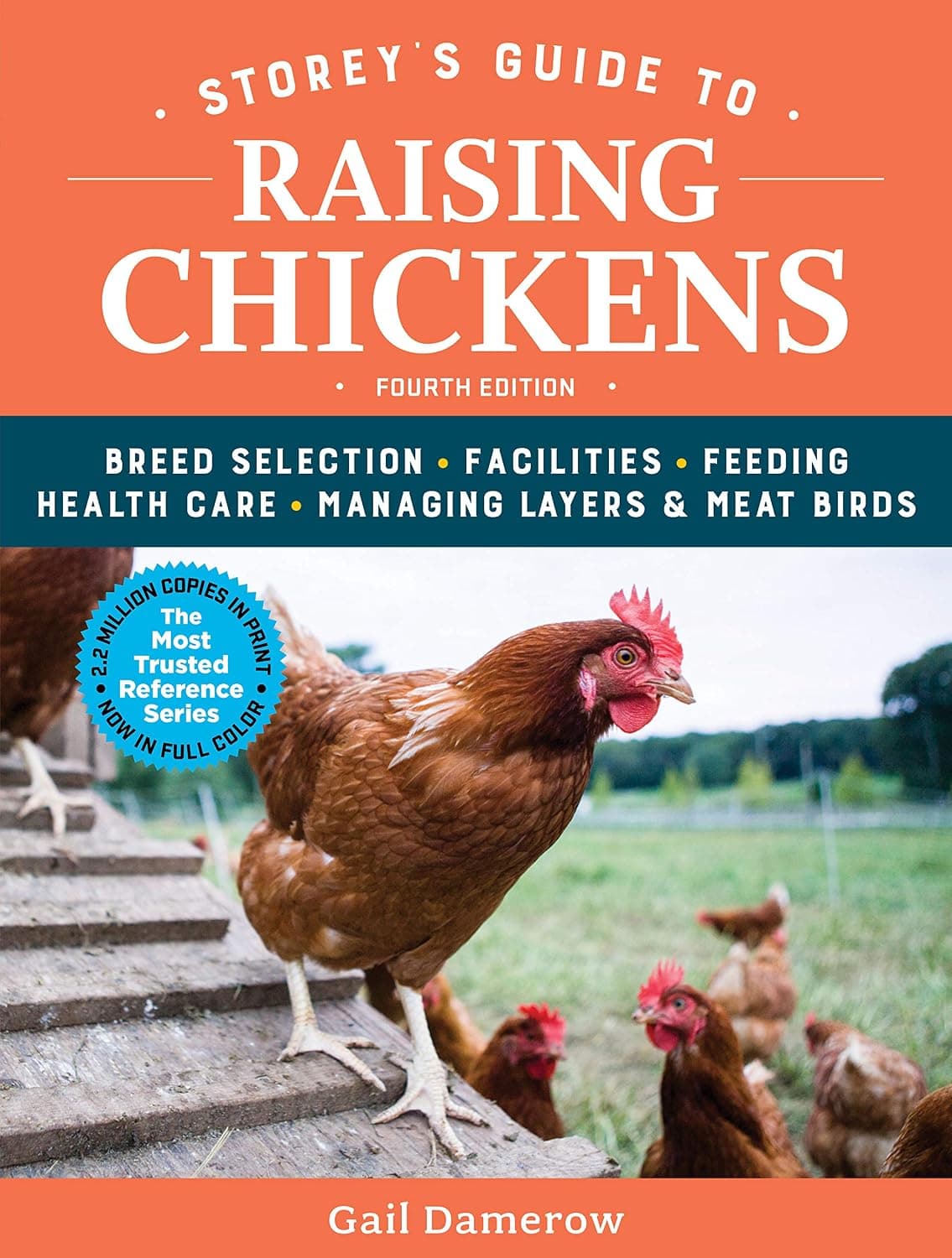
Storey's Guide to Raising Chickens, 4th Edition by Gail Damerow, an in-depth reference covering breeds, housing, feeding and health.
Price range: $ (Budget)
What we liked
- + Covers breed selection, facilities, feeding and health care in one volume
- + 4th Edition brings updated guidance to a long-running classic
- + Addresses both layers and meat birds for broader flock plans
Trade-offs
- - Dense reference style can feel heavy for casual beginners
- - Print book lacks the quick visual walkthroughs of online videos
Who this book is written for
This is a reference book, not a picture-heavy starter pamphlet, so it suits keepers who want one volume to return to across the life of a flock rather than a single afternoon read. Gail Damerow wrote it for people planning housing and breed choices before birds arrive, as well as existing keepers troubleshooting feeding, egg production or health questions later. The subtitle covers breed selection, facilities, feeding, health care, and managing both layers and meat birds, so it works whether the goal is a small backyard egg flock or a mixed meat and egg operation. Homesteaders who want fewer separate books on their shelf get the most value, since one guide spans planning through daily management. Someone who only wants a quick coop-building checklist may find it more thorough than needed, but for anyone committing to chickens long term it functions as the core reference the rest of a library builds around, matching our score of 9.4 out of 10 for fit.
What the 4th edition actually covers
Published by Storey Publishing at 424 pages in trade paperback, the 4th edition revises and redesigns Gail Damerow's long-running guide with updated color photos and illustrations for breed identification, anatomy and health checks. Content is organized around the practical arc of keeping chickens: choosing breeds suited to eggs, meat or both, planning coop and run facilities, feeding programs for different life stages, and preventing and recognizing health problems. It also folds in newer research on chicken behavior and communication, which feeds into advice on flock social dynamics and enrichment. Because it addresses both layers and meat birds in the same volume, keepers raising a mixed-purpose flock are not left needing two separate specialty books. The breadth is the book's main selling point and also why it reads as dense reference material rather than a light introduction, consistent with the 9 out of 10 given for features and specs.
Using it day to day as a flock reference
In practice this book earns its keep as a shelf reference you pull down for specific questions rather than something read cover to cover in one sitting. New keepers tend to use the breed selection and facilities chapters heavily before birds arrive, then shift to the feeding and health sections once a flock is established. Because it is a physical paperback rather than a video course, there is no built-in search function, so locating a specific symptom or breed trait depends on the table of contents and index rather than a quick keyword lookup. That format also means it holds up without an internet connection or app, which matters for anyone keeping birds somewhere with unreliable signal. Owners planning to raise both layers and meat birds get more mileage from the single-volume approach, since switching between separate breed and health guides is less convenient than one integrated reference covering the full flock lifecycle.
Trade-offs and how it compares to other keeper books
The honest trade-off is that Storey's Guide reads as a comprehensive reference rather than a beginner-friendly walkthrough, which can feel heavy if someone wants a fast, casual introduction before committing to chickens. Readers who prefer quick visual walkthroughs over dense text may lean toward video content instead, since a print reference cannot replicate that format. Within the same lineup of chicken keeping books, Gail Damerow's own The Chicken Health Handbook, 2nd Edition ranks close behind at a 9.0 in the same guide and works well as a companion once a flock is established, since it goes deeper into disease and symptom detail than the general facilities and feeding chapters here. Anne Kuo's The Beginner's Guide to Raising Chickens is a lighter entry point for someone who wants a shorter first read before graduating to a denser reference like this one.
Verdict and who should look elsewhere
Storey's Guide to Raising Chickens, 4th Edition earns its top rank in the best chicken keeping books guide because it covers breed selection, housing, feeding and health in one comprehensive, well-illustrated volume that keepers return to for years, backing up our score of 9.4 out of 10 overall. It is the right pick for anyone building a permanent chicken keeping library or planning a flock before birds arrive. Casual readers who only want a light overview before deciding whether to keep chickens at all may prefer to start with a shorter beginner guide and add this reference once they commit. Keepers focused mainly on disease and symptom troubleshooting rather than general management may get more targeted value from pairing it with, or starting with, The Chicken Health Handbook instead.
Frequently asked questions
Is Storey's Guide to Raising Chickens good for complete beginners?
It works for beginners who want a thorough reference, but its dense, encyclopedic style suits someone ready to commit to chickens more than a casual first read. A shorter primer alongside it can help total beginners ease in.
Does this book cover both egg-laying hens and meat birds?
Yes, the subtitle and content explicitly address managing layers and meat birds, so it suits mixed-purpose flocks as well as egg-only setups.
How is the 4th edition different from earlier editions?
Storey Publishing revised and redesigned the 4th edition with new color photos and illustrations for breed identification, anatomy and health topics, and updated the content based on current research into chicken behavior.
Should I buy this or The Chicken Health Handbook first?
Storey's Guide is the broader general reference covering breeds, housing and feeding, while The Chicken Health Handbook focuses specifically on disease and symptoms. Many keepers end up with both, but this one is the better single starting point.
Prices change often, so check the current price and availability on Amazon.
Check price on AmazonChicken Coop Nest may earn a commission from the link above.