Chicken Feeder Port Kit, 6 Ports No Waste Feeder Cups with Rainproof Covers and 3.15" Hole Saw Review (2026)
Updated September 14, 2026 · Research-based review
Our verdict
A budget-friendly way to turn a bucket or bin you already own into a no-waste gravity feeder, with the matching hole saw included so the ports seat properly. It suits handy keepers willing to drill their own container, but you still need to supply that bucket or bin yourself.
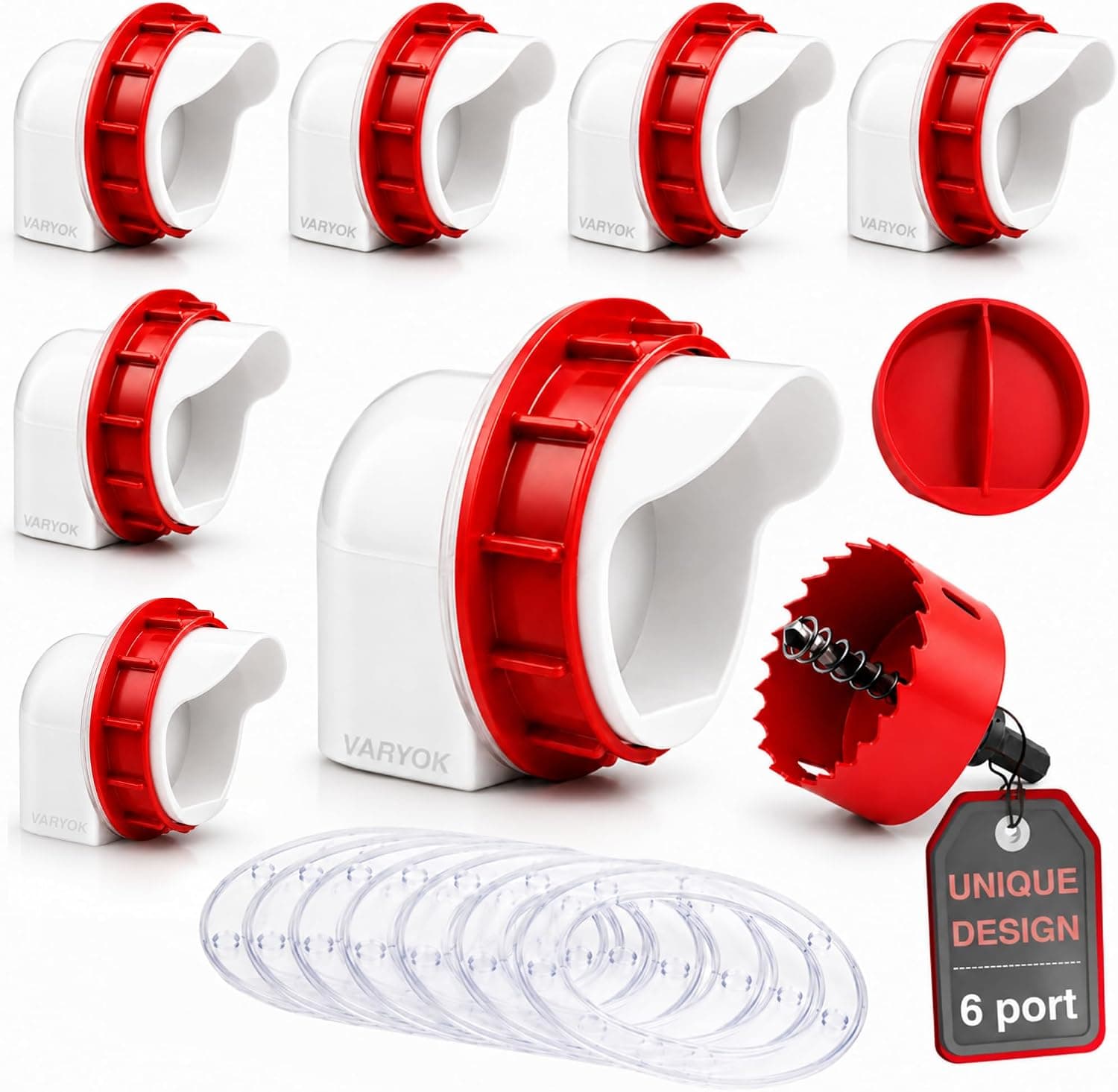
A 6-port no-waste feeder cup kit with rainproof covers and a 3.15" hole saw, for building a sturdy DIY bucket feeder.
Price range: $ (Budget)
What we liked
- + Included 3.15" hole saw matches the cup size, so the ports seat snugly
- + 6 feeder cups give room for a mid-sized flock without constant crowding
- + Rainproof covers over each cup help keep feed from clumping in wet weather
Trade-offs
- - You still have to supply and drill your own bucket or bin
- - Larger hole saw can crack brittle old buckets if you drill too fast
Who this feeder kit suits
This kit is aimed at keepers who would rather build a feeder from a bucket, barrel or bin they already have than buy a complete pre-built feeder. Because it includes a 3.15 inch hole saw sized to match the feeder cups, it removes the guesswork of finding the right drill bit separately, which is where many DIY feeder projects go wrong. With 6 ports, it gives a mid-size flock several feeding points around one container, reducing crowding and competition compared with a single-opening feeder. Keepers comfortable with basic drilling and who want to keep costs down by reusing containers are the best fit, rather than anyone who wants an out-of-the-box feeder with nothing to assemble.
Ports, materials and installation explained
Each of the 6 ports uses a concave, gravity-fed cup shape designed to keep feed flowing down to the birds as they eat while limiting how much spills out onto the ground. Rainproof covers and sealing gaskets sit over each port to keep feed dry in wet weather and to make it harder for rodents to raid the container overnight. The parts are made from PVC and food-grade plastic built to handle sun, rain and wind outdoors. Installation means marking port locations around your chosen bucket, barrel or bin, then using the included 3.15 inch hole saw to cut clean, properly sized holes so the ports snap or seat in snugly without gaps.
Setting it up and using it
Once the ports are installed, the container should sit with the feeding ports roughly 6 to 11 inches above the ground, low enough for chickens to comfortably reach but high enough to keep feed away from mud and droppings. Filling the container from the top keeps the gravity system working, with feed sliding down to refill each port as birds empty it. Because this is a DIY build, the finished feeder's weatherproofing depends partly on your container choice, so a bucket with a tight-fitting lid on top will keep the whole system drier than an open-top bin. Check the port covers periodically to make sure they are seating fully and not letting rain track in around the edges.
Trade-offs and how it compares
The clear trade-off against a fully assembled treadle or hopper feeder is that you supply and drill your own bucket, which takes more effort up front but costs less than buying a complete feeder outright. Against similar port kits like the 12 port DIY kit with a critter stopper or the 8 port version for larger buckets, this 6 port kit is sized for smaller to mid-size flocks rather than a large operation needing many simultaneous feeding points. A larger hole saw like the one included here can crack an older, more brittle plastic bucket if you drill too fast, so going slow and steady on the first cut is worth the extra minute.
Verdict and who should pick something else
This kit earns our score of 8.4 out of 10 for pairing a properly matched hole saw with rainproof, gravity-fed ports at a lower cost than a built feeder, giving handy keepers a straightforward weekend project. It suits anyone with a spare bucket or bin and basic drilling comfort who wants several feeding points for a mid-size flock. Keepers who want a feeder with nothing to drill or assemble should choose a complete treadle or hopper feeder instead, and anyone feeding a larger flock that needs more than 6 simultaneous access points should look at an 8 or 12 port version.
Frequently asked questions
Do I need to buy my own bucket for this kit?
Yes, the kit provides the feeder ports, covers and a matching hole saw, but you supply the bucket, barrel or bin the ports are installed into.
Will the hole saw crack a plastic bucket?
It can if you drill too fast on an older or brittle bucket, so drilling slowly and steadily through the first cut helps avoid cracking.
How high should the feeder ports sit off the ground?
The ports work best placed roughly 6 to 11 inches above the ground, within easy reach for chickens while staying clear of mud and droppings.
Are the ports rainproof?
Each port has a rainproof cover and sealing gasket, though how weatherproof the finished feeder is also depends on the container you choose.
Prices change often, so check the current price and availability on Amazon.
Check price on AmazonChicken Coop Nest may earn a commission from the link above.