KERTY Nesting Boxes for Chicken Coop with 4 Compartments, Roll Out Nest Boxes with Auto Collection and Perch Review (2026)
Updated September 21, 2026 · Research-based review
Our verdict
A solid pick for a backyard flock of six to twelve hens that needs cleaner eggs without a full coop rebuild. The auto collection tray and perch cut down on pecked and dirty eggs, though you still need a stud wall or frame strong enough to hold it once loaded.
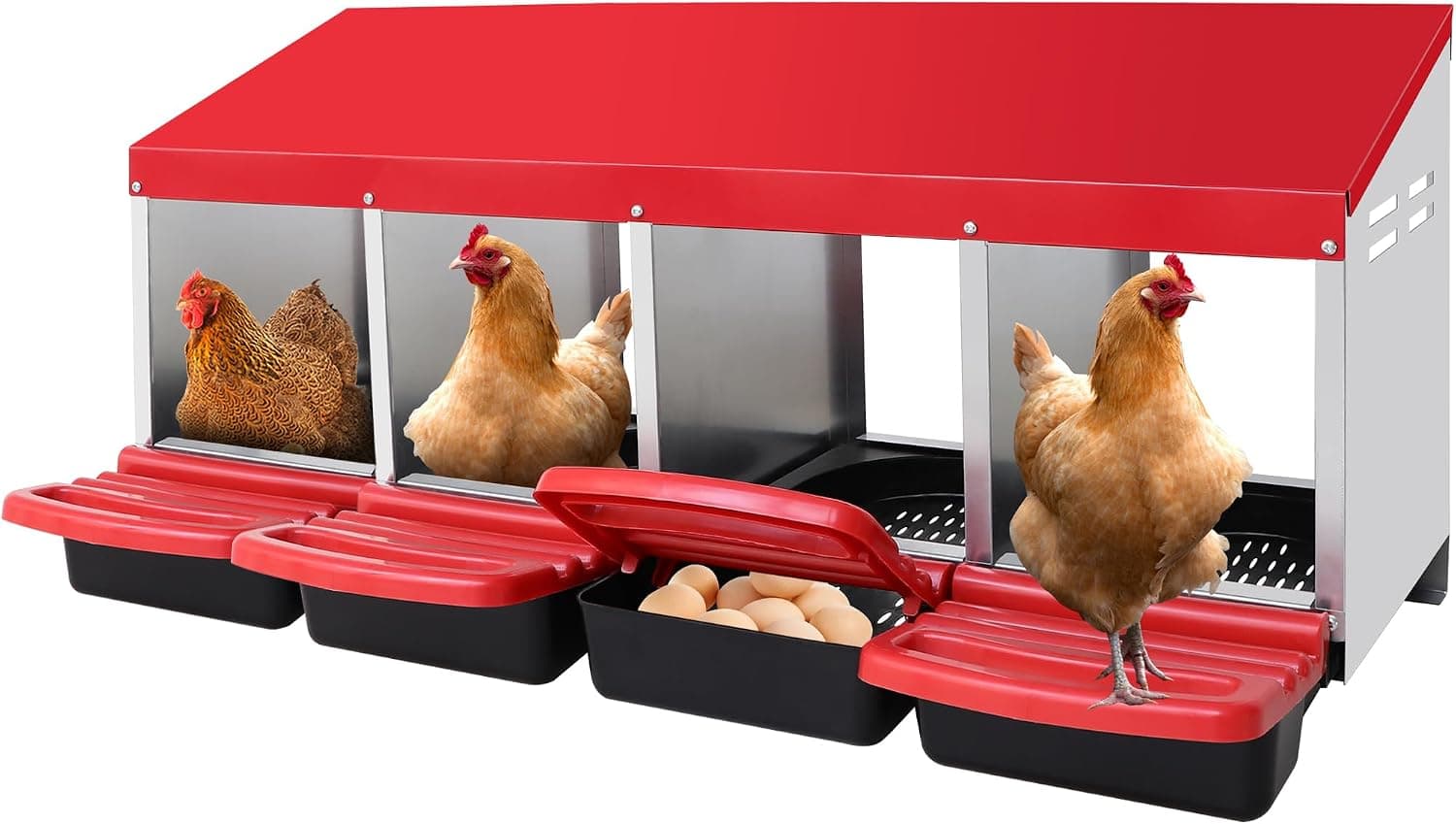
KERTY's 4 compartment roll out nest boxes with auto collection and perch, for clean eggs from a mid-sized flock.
Price range: $ (Budget)
What we liked
- + Auto collection tray gathers eggs in one place for quick pickup
- + 4 compartments give enough nests for a typical backyard flock
- + Perch in front makes it easy for hens to hop in and out
Trade-offs
- - Check whether it is plastic or metal before buying for durability
- - Roll out floors need the right angle or eggs may stall in the box
What this nesting box is built for
This is a wall or frame mounted nest box with four separate compartments, aimed at flocks in the six to twelve hen range where a single or double hole box would fall short during peak laying season. Each compartment funnels a laid egg forward into a shared collection channel instead of leaving it sitting in loose bedding, which is the main selling point over a plain wooden nest. A front perch runs the width of the unit so hens have a landing spot before stepping down into a hole, which matters more than it sounds since skittish hens often refuse to jump straight into a dark box. The listing frames it as a step up from repurposed milk crates or cardboard boxes for anyone whose flock has outgrown a starter setup.
Materials and construction
The manufacturer describes the box as built from galvanized steel with easy to clean plastic components rather than raw wood, which is worth knowing since damp bedding and manure rot out untreated wood nest boxes within a season or two. The compartments are vented so air moves through the nesting material and keeps it from turning damp and moldy, and the design includes small drain holes at the bottom of each hole so any spilled water or condensation has somewhere to go instead of pooling under the bedding. That combination of steel frame, plastic liners and ventilation is a reasonable approach for a coop that deals with humidity, rain splash or a hose down cleaning routine.
Mounting and setup options
The box ships with removable bracket legs, which means it can be hung on a coop wall, set directly on the ground, or stood up on its own legs like a small table depending on how your coop is laid out. That flexibility is useful if you are retrofitting an existing coop where wall studs are not exactly where you want them, since a floor standing setup sidesteps the mounting question entirely. Assembly is described as quick, using the included hardware and instructions, and most owners of similar roll style boxes report needing no more than a screwdriver and about twenty minutes. Because it holds four hens worth of nesting material and eggs at once, plan for a mounting point that can carry real weight once bedding and a full morning of eggs are inside.
Egg collection in daily use
The auto collection design is meant to let a laid egg roll gently away from the hen into a shared tray or channel, which keeps it out of reach of pecking, less likely to get stepped on, and easier to gather in one pass instead of checking four separate holes. This only works well if the box sits close to level with a slight forward pitch, since a roll out floor set too flat will let eggs stall inside the compartment and a floor pitched too steeply can send eggs rolling too fast and cracking on impact. Get the angle right during setup and this becomes the main reason to choose this style of box over a basic covered crate, since gathering eggs turns into checking one tray rather than reaching into four dark holes.
Who should buy it and who should skip it
This box suits a keeper with an established flock of laying hens who wants fewer cracked, dirty or eaten eggs and is willing to mount it securely and set the roll angle correctly. It is not the cheapest option if you only keep two or three hens, since a smaller two hole box would cover that flock size for less money and less wall space. Anyone who prefers solid wood construction for a more traditional look should also compare against wooden roll away boxes, since this unit leans on steel and plastic rather than timber. For a mid sized flock that has outgrown a starter nest box, though, four compartments with a shared collection tray and perch is a sensible middle ground between a basic box and a full commercial rollaway system.
Frequently asked questions
How many hens can use a 4 compartment nesting box like this?
As a general rule one nest hole comfortably serves three to four laying hens, so four compartments suit a flock of roughly twelve to sixteen hens, though hens often crowd into favorite holes regardless of how many are available.
Does it need to be mounted on a wall?
No. It ships with removable bracket legs so it can be hung on a wall, placed on the ground, or set up freestanding on its own legs depending on your coop layout.
Will the roll out feature work if the box is not perfectly level?
It needs a slight forward pitch to work as intended. Too flat and eggs stall in the compartment, too steep and eggs can roll fast enough to crack, so check the angle once it is mounted.
Is it easy to clean?
The plastic compartments and drain holes at the bottom of each hole are designed to be wiped or rinsed out and to let spilled water drain rather than pool under the bedding.
Prices change often, so check the current price and availability on Amazon.
Check price on AmazonChicken Coop Nest may earn a commission from the link above.