Pecking Order Nest Box Pads for Chicken Nesting Boxes, 13 x 13 Aspen Excelsior, 10 Pack Review (2026)
Updated September 20, 2026 · Research-based review
Our verdict
A straightforward nest box liner for keepers who want faster cleanup than loose shavings or straw. The 13 x 13 aspen excelsior pads cushion eggs well and keep them on top of the mess, though heavy scratchers can wear a pad apart faster than expected.
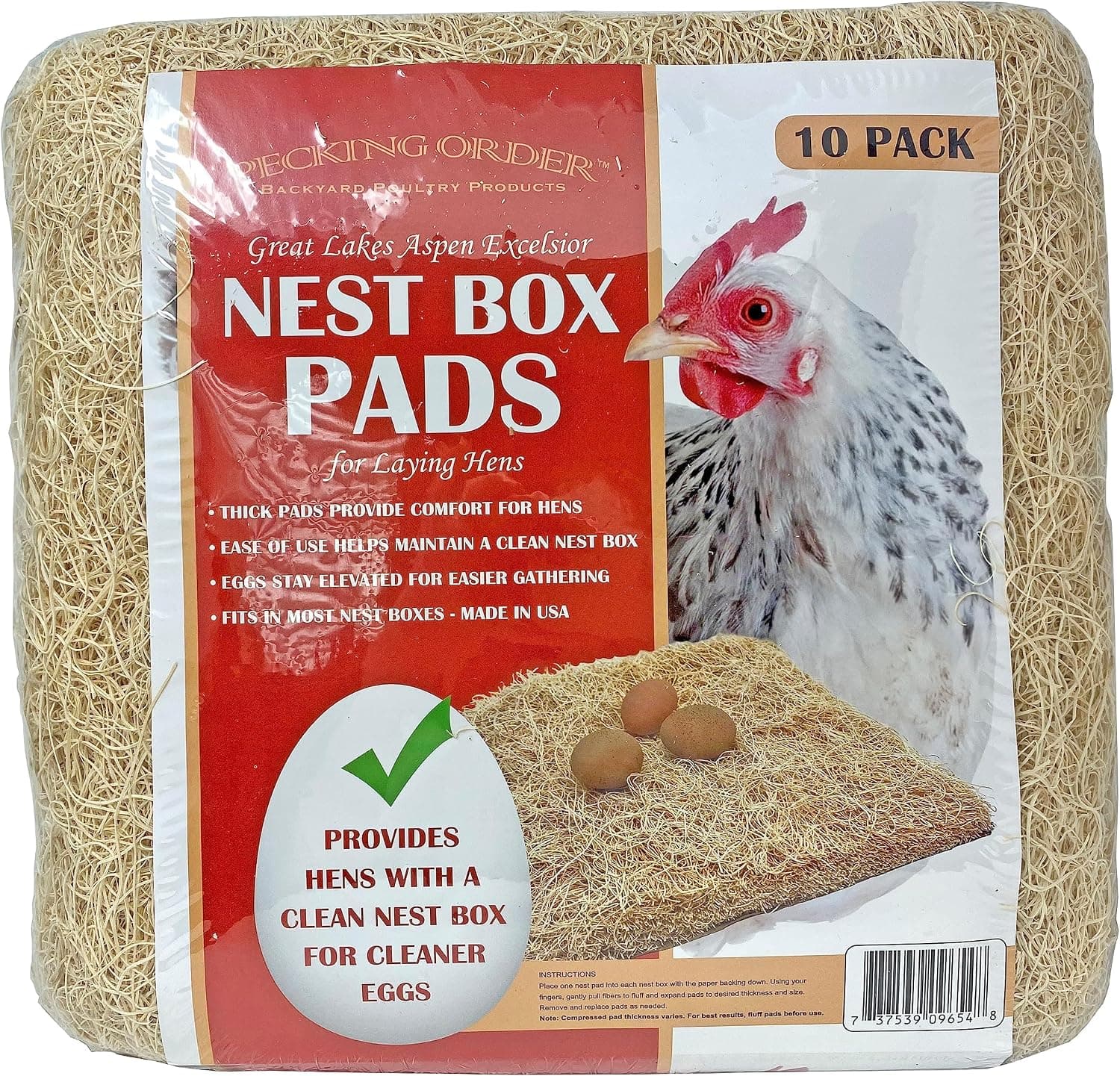
Pecking Order's 13 x 13 aspen excelsior nest box pads in a 10 Pack, soft liners that fit standard nesting boxes.
Price range: $ (Budget)
What we liked
- + 13 x 13 size fits many standard metal and wooden nest boxes
- + Aspen excelsior cushions eggs and helps prevent cracks
- + 10 Pack lets you swap in fresh pads as old ones get soiled
Trade-offs
- - Pads may need trimming to fit smaller or odd-shaped nest boxes
- - Hens sometimes scratch excelsior apart, so pads wear over time
What these pads are
Pecking Order's nest box pads are 13 x 13 inch mats made from aspen excelsior, thin curls of wood fiber, bonded to a kraft paper backing. They are made in the USA and sourced from forest product companies that belong to the Sustainable Forestry Initiative program, so the wood comes from managed timberland rather than random scrap. The pads are sold in a 10 pack, which is enough to outfit several boxes or to keep a rotation of fresh pads ready as older ones get soiled. The 13 x 13 footprint is the standard size for most metal and wooden nest boxes sold for backyard coops, so most keepers can drop a pad straight in without cutting it down, though boxes built to unusual dimensions may need a trim to fit flush against the sides.
How the excelsior works
The excelsior fiber is loosely woven rather than packed flat, which the maker says lets wet droppings settle down through the fibers and away from the nest surface while a freshly laid egg stays up on top instead of sinking into the mess. That matters for two reasons: eggs are easier to spot and collect, and they spend less time sitting in contact with soiled bedding, which helps keep shells cleaner between collections. Before placing a new pad in the box, the maker recommends fluffing it by raking your fingers through the fibers so the curls separate and cushion properly, rather than using it flat out of the pack, which compresses the fibers during shipping and storage.
Cushioning and egg protection
Aspen excelsior has been a standard nest box material for decades because the springy curls absorb impact better than flat straw or a bare wire floor, which lowers the odds of a dropped or rolled egg cracking before you collect it. Compared to sand or pine shavings, the pad format also stays in place as a single unit rather than shifting or scattering when a hen digs and turns before settling in, which keeps the nest box tidier between cleanings. The tradeoff is that a pad cannot be topped up the way loose bedding can. Once it flattens or a hen tears sections apart, the whole pad needs to be swapped rather than fluffed back into shape.
Care and how long a pad lasts
How long a single pad holds up depends heavily on the hen using it. Calm layers that settle in gently can use one pad for a couple of weeks, while hens that scratch and dig aggressively before laying can shred a pad's fibers apart in days, scattering loose excelsior around the box. Replacing a pad takes seconds since it is a full mat rather than a scoop-and-sift job, which is the main appeal over shavings or straw for keepers who want a fast weekly nest box refresh. With a 10 pack on hand, most small flocks can go a couple of months of regular swaps before needing to reorder, though flocks with several hard scratchers will burn through the pack faster.
Who should buy these
These pads suit keepers running a handful of standard-size nest boxes who want a quicker alternative to loose bedding and like being able to swap a whole liner in one motion rather than scooping out soiled shavings. They are a good match for anyone already frustrated by eggs sinking into straw or getting buried under scratched-up shavings, since the excelsior format is built specifically to keep eggs visible and cushioned on top. Keepers with oddly sized or very small nest boxes, or hens known for shredding bedding apart quickly, may find themselves trimming pads to fit or replacing them more often than the pack count suggests, which is worth factoring into the cost per use before buying.
Frequently asked questions
What size nest box do these pads fit?
They are cut to 13 x 13 inches, which matches most standard metal and wooden nest boxes. Boxes with unusual shapes or smaller openings may need the pad trimmed to fit.
Do I need to prepare the pad before use?
The maker recommends fluffing the excelsior by raking your fingers through it before placing it in the box, since the fibers compress flat during packaging and shipping.
How often do the pads need replacing?
It varies by hen. Gentle layers can use one pad for a couple of weeks, while hens that scratch heavily can wear a pad apart in days.
Are these pads made from recycled material?
They are made from aspen excelsior wood fiber sourced from Sustainable Forestry Initiative member companies, not from recycled paper or plastic.
Prices change often, so check the current price and availability on Amazon.
Check price on AmazonChicken Coop Nest may earn a commission from the link above.