Cozy Products Cozy Coop Chicken Coop Heater, Flat-Panel Radiant Heater with Thermal Protector, 200 Watts Review (2026)
Updated September 14, 2026 · Research-based review
Our verdict
A safer alternative to a heat lamp for keepers in cold climates who want gentle background warmth without the fire risk of a hot bulb. The flat panel design and thermal protector suit small to mid-size coops, though only birds roosting close to the panel feel real benefit from the radiant heat.
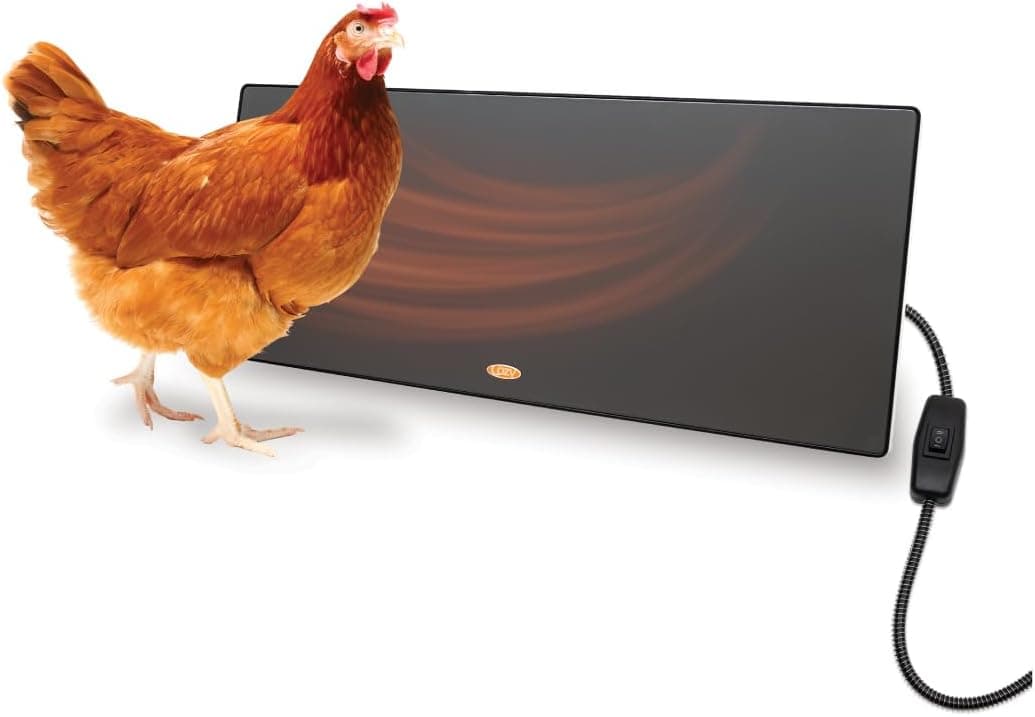
Cozy Products' Cozy Coop 200 Watts flat-panel radiant heater with a thermal protector for gentle winter warmth.
Price range: $ (Budget)
What we liked
- + Flat-panel design avoids the fire risk of hot heat lamp bulbs
- + Thermal protector cuts power if the panel overheats
- + 200 Watts gives steady low heat without huge power draw
Trade-offs
- - Needs a safe outdoor-rated power supply at the coop
- - Radiant warmth only reaches birds roosting close to the panel
Who this heater is for
This panel heater is aimed at keepers in genuinely cold climates who worry about frostbite on combs and feet during hard freezes, rather than anyone trying to heat an entire coop to a warm indoor temperature. Because it uses radiant heat rather than warming the surrounding air, it works best for a flock that will roost or gather near the panel during the coldest nights. Keepers who have used heat lamps before and want to cut the fire risk that comes with a hot glass bulb hanging near bedding and dust are a natural fit, since this flat panel runs at a much lower surface temperature. It suits small to mid-size coops where a single panel can cover the main roosting area.
Design, wattage and safety features explained
The heater draws 200 watts, far less than a traditional 1,500 watt space heater, while still providing enough radiant output to raise the immediate area around it. It is built as a flat panel, about three quarters of an inch deep, which can mount to a wall or stand freestanding depending on coop layout. A built-in thermal protector cuts power if the panel overheats, and the unit is listed for zero-clearance mounting, meaning it is rated safe to install close to combustible surfaces like wood framing, unlike a heat lamp that needs a wide safety clearance. The cord uses a coil-shielded, stainless-steel wrapped design meant to resist pecking and chewing damage from curious birds.
Setting it up and living with it through winter
Mounting is straightforward, using screw-on metal feet for a freestanding setup or direct wall mounting near a roost. Because the heater relies on radiant warmth rather than heating the whole coop, placement matters more than with a space heater, so position it where birds naturally gather or roost on cold nights rather than in an unused corner. An in-cord on-off switch makes it easy to power down in milder stretches of winter without unplugging the whole unit. Because it is an electrical device in a dusty, sometimes damp environment, route and secure the cord well away from bedding and nesting material, and check the panel periodically for dust buildup that can affect heat transfer over a season.
Trade-offs and how it compares
The main trade-off with any radiant panel heater is coverage. Birds that roost away from the panel get little benefit, unlike a space heater that warms the whole air volume of a coop, so panel placement and roost layout matter more here than with other heating methods. Compared with insulation-based options like double bubble reflective foil rolls, which some keepers use instead of or alongside active heating, this panel adds real heat rather than just slowing heat loss, which matters more in genuinely cold regions rather than mild climates where insulation alone may be enough. For very large coops or scattered roosting spots, more than one panel, or a different heating approach entirely, may be needed.
Verdict and who should pick something else
This heater earns our score of 8.4 out of 10 for combining meaningful cold-weather protection with a safety profile well ahead of a bare heat lamp, at a low 200 watt draw. It suits keepers in cold climates with a compact roosting area where one panel can reach most of the flock. Keepers in mild climates who rarely see hard freezes may not need active heating at all and can rely on draft-proofing and insulation instead, and keepers with a large coop or widely spread roosts should plan for multiple panels or reconsider layout so birds can actually reach the heat source on the coldest nights.
Frequently asked questions
Is this heater safer than a heat lamp?
Yes, the flat panel runs at a much lower surface temperature than a heat lamp bulb and includes a thermal protector, and it is rated for zero-clearance mounting near combustible surfaces.
Will this heater warm the whole coop?
No, it provides radiant heat mainly to birds near the panel rather than warming the full air volume, so placement near the roost matters.
Can chickens peck or damage the cord?
The cord uses a coil-shielded, stainless-steel wrapped design meant to resist pecking and chewing, though routing it away from easy reach is still good practice.
How much power does this heater use?
It draws 200 watts, considerably less than a standard space heater, which keeps running costs relatively low through a cold season.
Prices change often, so check the current price and availability on Amazon.
Check price on AmazonChicken Coop Nest may earn a commission from the link above.