Premier 1 PoultryNet Electric Fence for Backyard Chickens, Ducks and Turkeys with Step-in Posts, 48 in H x 164 ft L, White Review (2026)
Updated September 14, 2026 · Research-based review
Our verdict
This white PoultryNet suits keepers who want a step-in post fence for chickens, ducks, or turkeys with a more traditional look than bright yellow. It sets up in minutes with no tools and covers 164 feet, but white netting is harder to spot in snow, and a separate energizer is still required.
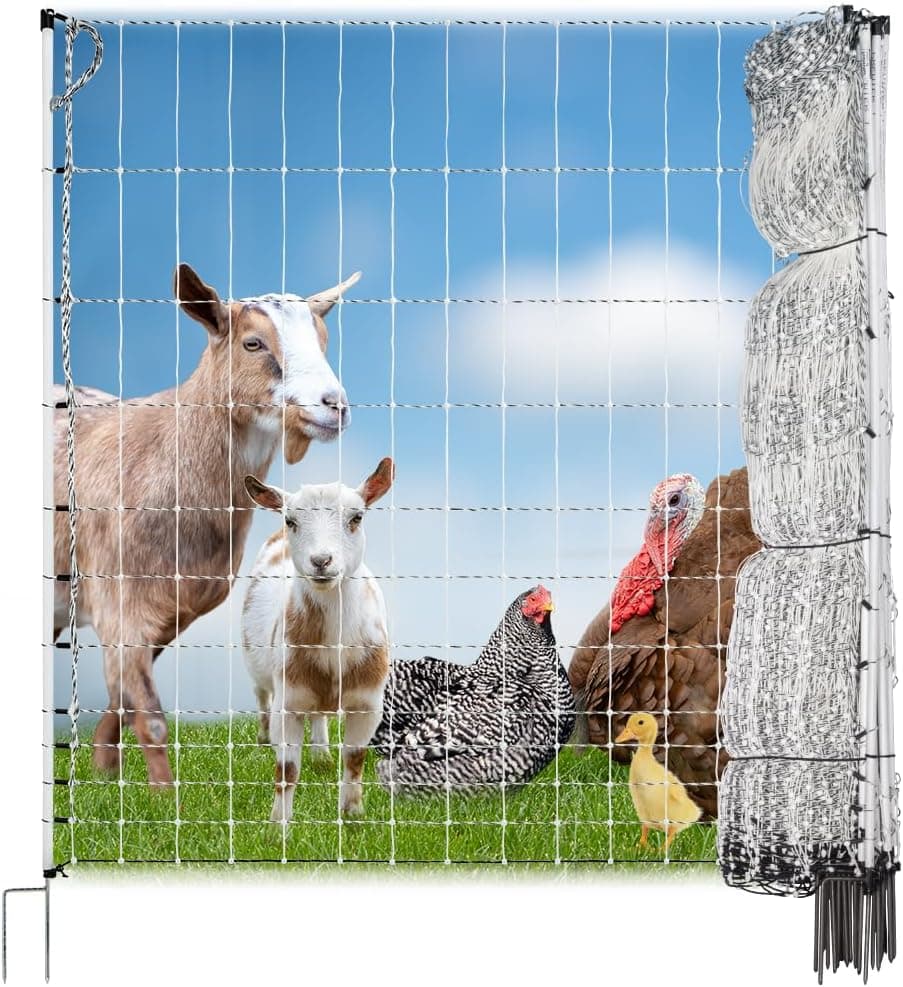
Premier 1's white PoultryNet with step-in posts, 48 in H x 164 ft L, for backyard chickens, ducks and turkeys.
Price range: $ (Budget)
What we liked
- + Step-in posts are built in, so setup is quick without tools
- + Suits chickens, ducks and turkeys in one moveable pasture
- + 164 ft L gives a generous free-range area
Trade-offs
- - White netting is harder to see than colored options in snow
- - Grass must be kept short or it grounds out the fence
Who this fence fits
This is Premier's 12/48/3 PoultryNet in white and black, sized to enclose a meaningful pasture area for chickens, ducks, and turkeys that free-range under rotational grazing rather than living in a fixed run. Step-in posts are built into the mesh, which is standard across this Premier line, so setup does not require driving separate stakes. The white color reads as more traditional against green grass and blends in more than bright yellow, which some keepers prefer for appearance in a residential yard, though it is less visible in snow or at dusk. This is a fence for people actively managing pasture rotation, not a permanent boundary, and anyone wanting a fixed enclosure is better off with a hardware cloth run.
Netting spec and predator protection
The 12/48/3 designation means 12 horizontal strands, 11 of them carrying current, standing 48 inches once installed, with vertical strings every 3 inches, a spacing tight enough to discourage smaller predators from squeezing through near ground level. Premier builds the step-in posts into the netting roughly every 10 feet, and a full 164 foot roll weighs around 23 pounds, light enough to carry and unroll solo. Premier states this style contains chickens, ducks, and turkeys while keeping out coyotes, foxes, and dogs, but that protection only exists once the netting is charged, so treat the fence itself as a barrier and deterrent rather than a fail-safe on its own.
Setup, energizer needs, and daily use
Premier notes that even first-time users can go from a boxed roll to an installed fence in under 15 minutes with no tools, since the step-in posts are already woven into the mesh and just need pressing into the ground. The energizer and ground rod are sold separately, and Premier recommends at least a 0.6 joule pulse-style unit for up to three rolls of this netting strung together. Once it is powered, check the charge regularly with a fence tester, especially after storms, and keep grass trimmed along the base line, since tall wet grass touching the netting bleeds off current and weakens the shock. Moving the fence for rotational grazing is straightforward given the light roll weight and built-in posts.
Trade-offs against related Premier nets
Against the yellow version of this same 164 foot roll, the practical difference is visibility rather than function, since yellow stands out more in snow and low light while white blends in more against grass. Against Premier's double spike PrimaPosts netting, this step-in post design installs a touch faster out of the box but the standard posts are more flexible, meaning the fence line can sag more on soft or uneven ground over a season of moving it. If your yard sees heavy snow for stretches of the year, that is a real point in favor of the yellow roll instead, since a fence you cannot see well is a fence you are more likely to forget to check.
Verdict and who should pick something else
Choose this white PoultryNet if you like its more traditional look, your yard does not see prolonged snow cover, and you are ready to pair it with a separate energizer and ground rod. Choose the yellow version instead if visibility in snow or fading light matters more to you, or look at the double spike PrimaPosts netting if your ground is soft and you want a stiffer post that resists sagging. In every case, budget for the energizer as part of the purchase, since the netting alone provides no real predator deterrent until it is charged.
Frequently asked questions
Does this fence include an energizer?
No, Premier sells the energizer and ground rod separately, and the fence provides little protection against predators until it is connected to a working charger.
How is this different from the yellow version of the same fence?
The core specifications, 12/48/3 netting at 164 feet with step-in posts, are the same. The difference is color, and white blends into grass more while yellow is easier to spot in snow or low light.
How long does setup take?
Premier states that even a first-time user can install this fence in under 15 minutes with no tools, since the step-in posts are already built into the netting roll.
What size energizer does this fence need?
Premier recommends a pulse-style energizer of at least 0.6 joules for up to three rolls of this netting connected together, sized up if you plan to link additional rolls.
Prices change often, so check the current price and availability on Amazon.
Check price on AmazonChicken Coop Nest may earn a commission from the link above.